Locate the nighttime friction
Identify whether the recurring problem is settling to sleep, waking during the night, waking too early, or simply reaching morning without feeling restored.
- Falling asleep
- Staying asleep
- Morning restoration

Sleep quality is not only about hours in bed. Look at how easily you fall asleep, whether the night stays continuous, how restored you feel on waking, how regular your timing is, and what tiredness changes in your focus, mood, decisions, and energy.
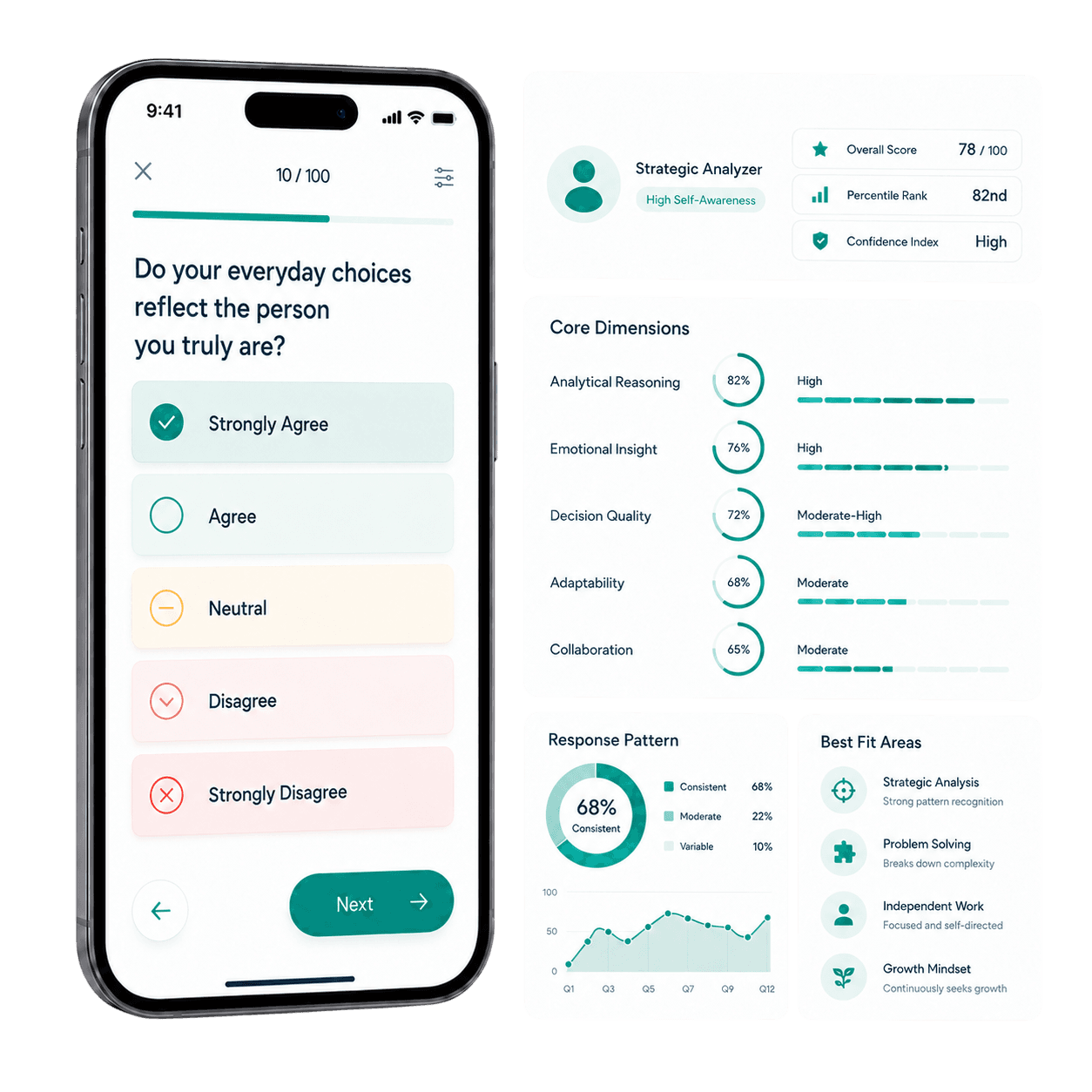
The assessment returns one overall sleep-quality level. Use the questions and report to connect nighttime disruption with the practical effects that follow rather than treating sleep as a single bedtime problem.
Identify whether the recurring problem is settling to sleep, waking during the night, waking too early, or simply reaching morning without feeling restored.
Look at schedule drift, late stimulation, caffeine, bedroom habits, naps, and other responses that may be interacting with the pattern rather than assuming one habit explains everything.
Use the result to decide whether the most important next step is protecting alertness, changing a repeatable habit, stabilizing timing, or discussing persistent symptoms with a qualified professional.
Think about your usual pattern rather than one late night, one unusually good sleep, or a short period of illness or travel.
Your answers place you from restorative sleep through increasing levels of sleep disruption. The questionnaire covers several sleep themes, but it does not return separate scores for each one.
Use the report to connect the level with nighttime events, timing, habits, morning recovery, and daytime effects so the next action is based on the part of the pattern that matters most.
No. TestCore uses its own sleep-quality questionnaire and scoring. It is not the PSQI and does not produce a PSQI global score or PSQI component scores.
You receive one overall level: restorative sleep, mild sleep disruption, moderate sleep disruption, poor sleep quality, or severely disrupted sleep, followed by a report that explains the result in practical context.
No. Questions cover sleep onset and continuity, restoration, schedule regularity, daytime impact, and sleep-related habits, but those themes contribute to one overall result rather than five separate sub-scores.
Yes. Sleep can still be fragmented, irregular, or unrefreshing, and daytime alertness can be affected even when time in bed looks adequate.
No. It is a self-reflection assessment, not a diagnostic test. Persistent sleep difficulty, major daytime sleepiness, loud habitual snoring, gasping, or witnessed breathing pauses are reasons to discuss sleep with a qualified healthcare professional.
Choose the part of the pattern with the clearest cost: disrupted nights, irregular timing, unrefreshing mornings, daytime sleepiness, or a repeatable habit. Then decide whether the next step is a practical adjustment, better tracking, or professional guidance.
The goal is not to chase a perfect night. Use the overall result to locate the recurring part of the sleep-to-day pattern that deserves the clearest response.