Energy and exhaustion
Whether you wake up already drained, and whether weekends and evenings off actually help.
- Physical and emotional tiredness
- How much rest restores you
- Energy left at the end of the day

Answer 100 statements about your energy, motivation, focus and downtime. Most people finish in 10 to 12 minutes, and your result shows how strong the signs of burnout are.
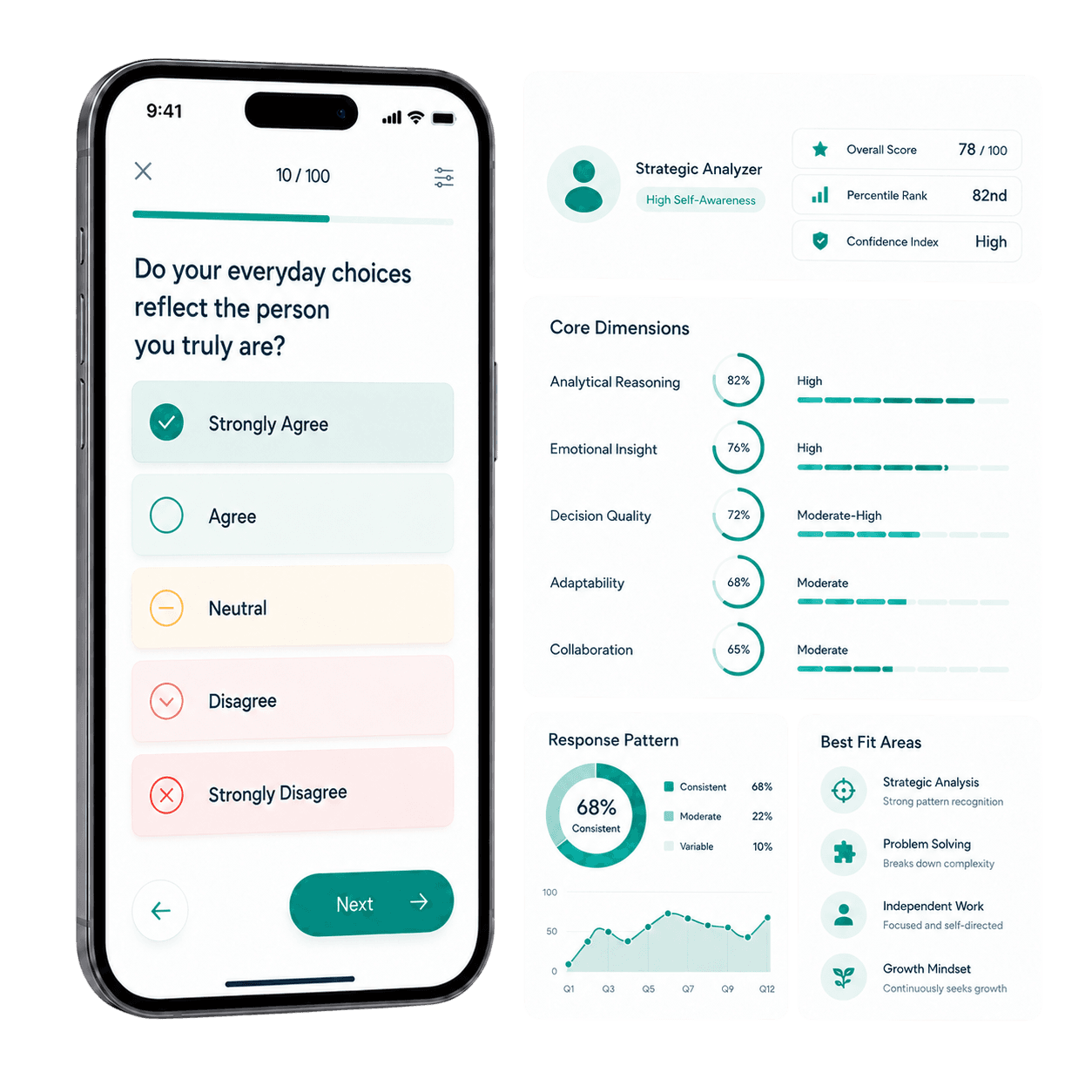
Burnout builds up gradually. The test looks at five areas where it tends to show, and your report explains which ones are under the most strain.
Whether you wake up already drained, and whether weekends and evenings off actually help.
Losing interest in work or people you used to care about, and finding it harder to think clearly.
How well you switch off, protect your free time and turn down demands you can't take on.
Rate how much each statement matches the last few weeks, from strongly disagree to strongly agree.
Your answers place you on one of five levels, from minimal to strong signs of burnout.
Get the full report to see which areas are affected most and what could help you recover.
There are 100 questions and most people finish in 10 to 12 minutes.
They range from minimal signs of burnout, through mild, moderate and high, to strong signs of burnout. Your report explains what your level means in practice.
No. Caring for a family member, studying or long periods of pressure at home can have the same effect. Answer with your whole life in mind.
No. It's a self-reflection tool and can't diagnose burnout, depression or any other condition.
If you feel exhausted most days or it's affecting your health, speak to your GP or a mental health professional.
Your answers and report are for your own use. We don't make individual results public.
Burnout is easier to deal with when you catch it early. The test takes 10 to 12 minutes and shows which parts of your life are taking the most out of you.