
Testcore

Find the attachment pattern that takes over when connection stops feeling simple.

A delayed reply, a request for space, a disagreement or the need to depend on someone can expose more than everyday compatibility. TestCore looks at the pattern behind what you fear, what you protect and what you do next.

Fast results
Secure
Private
Trusted by thousands of curious users
Rated 4.8/5by our users
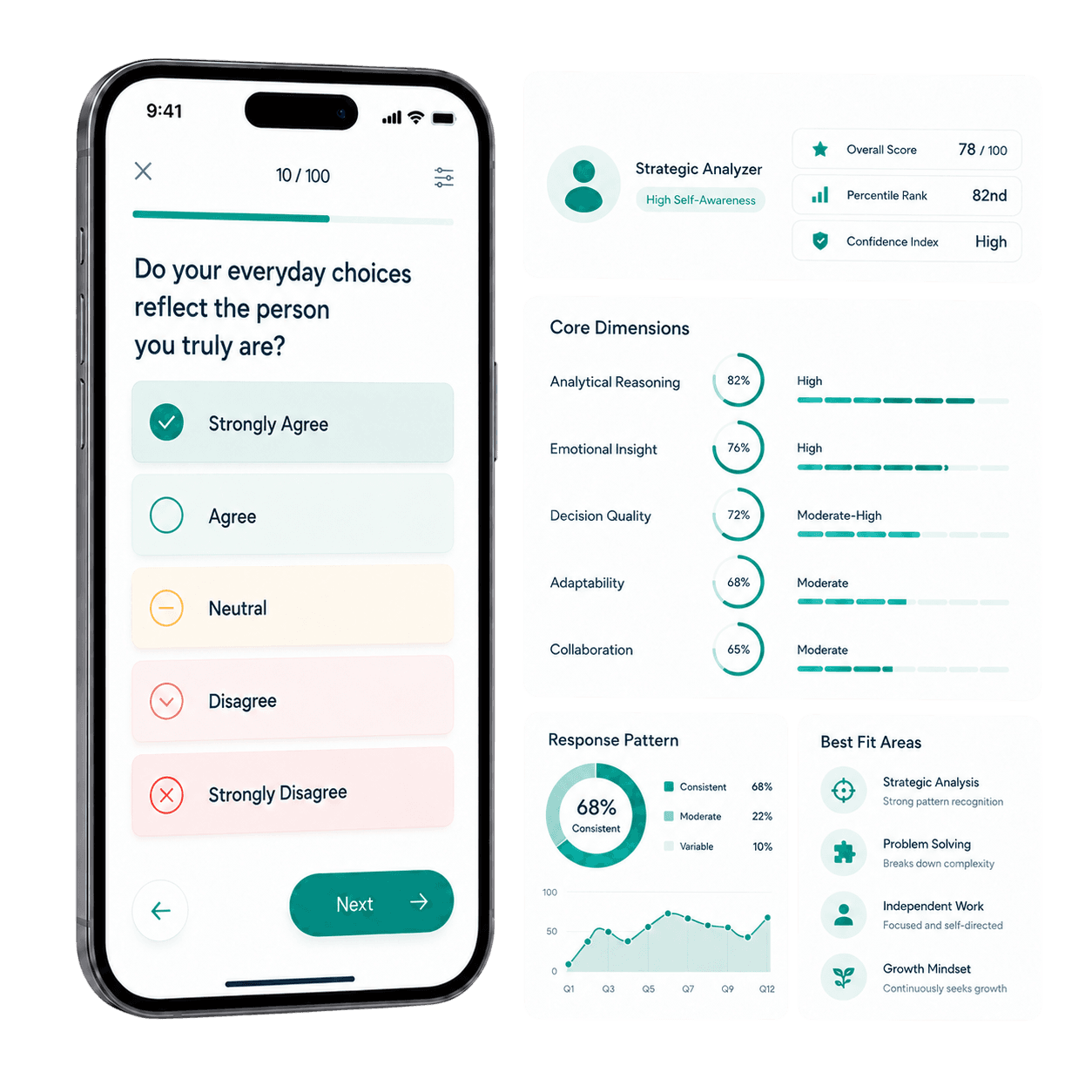
TestCore Attachment Style Test and personalised report preview

See where connection turns into protection

The test compares recurring reactions around trust, closeness, independence, reassurance, conflict and repair — the moments where attachment becomes visible in real behaviour.

Spot what changes when security drops

Do you become more watchful, ask for reassurance, pull back, rely only on yourself, or struggle to decide whether closeness is safe? The shift matters more than one isolated reaction.

  • Distance and silence
  • Dependence and support
  • Closeness under pressure

Find the protective move you repeat

Attachment patterns often make sense as protection: move closer, create distance, control emotion, restore contact quickly, or keep needs private. The result helps you see which strategy leads most often.

  • What triggers the move
  • How you protect yourself
  • What happens afterwards

Use the result before the next familiar moment

A useful profile gives you a pause point. Once you can recognise the pattern earlier, you have more room to ask directly, tolerate uncertainty, set a boundary or choose a different response.

  • Earlier recognition
  • Clearer communication
  • A more deliberate next move

How it works

1

Answer from relationships with real stakes

Think about trust, support, distance, conflict, boundaries and emotional closeness in relationships that actually mattered to you.

2

Get one leading attachment profile

TestCore compares your responses across five profiles and returns the strongest pattern. It does not diagnose you or produce a clinical attachment score.

3

Read the pattern against real pressure points

Use the report to compare the result with the moments where trust, closeness, reassurance or independence becomes hardest to manage.

Frequently asked questions

Q

What result does the Attachment Style Test give me?

TestCore returns one leading attachment profile based on the strongest pattern in your answers, followed by a narrative report covering emotional patterns, communication, relationships, responsibility, decisions, strengths and growth.

Q

Does this test use the standard four attachment labels?

TestCore uses five plain-language profiles in its own questionnaire and report. They reflect familiar attachment themes but are not presented as a validated four-category clinical instrument.

Q

Can my attachment pattern be different with different people?

Yes. Trust, consistency, stress, history and the other person's behaviour can affect how strongly an attachment-related reaction appears. Treat meaningful differences as context, not as errors.

Q

Can attachment patterns change over time?

Yes. Attachment is not destiny. Experience, safer relationships, self-awareness and therapy can all influence how people respond to closeness, dependence and uncertainty.

Q

Is this a diagnosis?

No. The Attachment Style Test is an educational self-report assessment, not a mental health diagnosis or clinical evaluation.

Q

How should I use the result?

Use it to recognise the situations where your usual protective response appears, then decide whether a clearer request, boundary, conversation or professional discussion would be useful next.

The attachment label matters less than the moment your behaviour changes

Adult attachment research often focuses on anxiety about rejection and avoidance of closeness or dependence. In real life, those tendencies become most useful when you can recognise the situation that activates them.

Compare calm relationships with high-stress moments
Notice whether you move toward reassurance or toward distance
Separate the current event from the meaning you immediately assign to it
Use the result to create a pause before the automatic response
Discover your attachment pattern
Takes around 10 minutesPrivate and secure