Testcore

Understand the BPD-related pattern before one intense moment becomes the whole explanation.

Strong emotions, fear of rejection, unstable self-view, impulsive reactions, and relationship conflict can feel like separate problems while you are living through them. This BPD test brings those experiences into one non-diagnostic view.

Fast results
Secure
Private
Trusted by thousands of curious users
Rated 4.8/5by our users
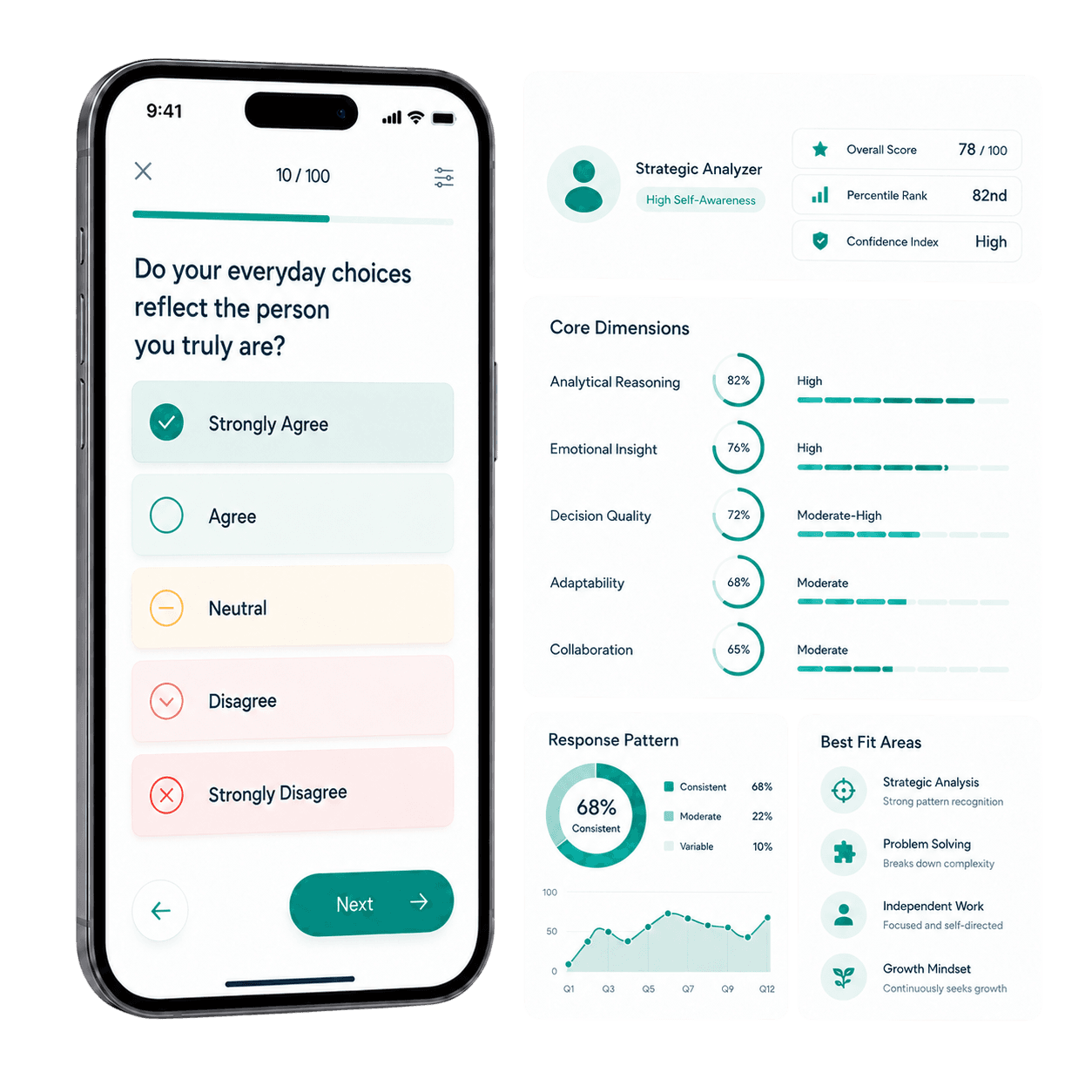
TestCore BPD Test and personalised report preview

The pattern matters more than one familiar symptom

A single difficult reaction cannot tell you whether BPD applies. The useful signal is what repeats across emotions, relationships, identity, behavior, and daily functioning.

Connect reactions that may share the same pressure point

Look at emotional escalation, perceived rejection, changes in self-view, impulsive choices, anger, emptiness, and stress-related disconnection as parts of a wider pattern rather than isolated incidents.

  • What tends to trigger the shift
  • What changes inside you
  • What happens next

Separate recognition from diagnosis

Recognising several BPD-related experiences can be important without proving a disorder. The assessment helps you describe repetition, context, and impact while leaving clinical conclusions to a qualified professional.

  • What repeats across time
  • What depends on the situation
  • How much daily life is affected

Use the result to make the next conversation more specific

A clearer personal record can help you identify what to monitor, what to work on, and what to discuss with a mental health professional if the pattern is persistent, distressing, or unsafe.

  • Concrete examples
  • A clearer next step
  • A private report based on your answers

How it works

1

Answer from recurring situations

Think across close relationships, conflict, rejection, anger, impulsive moments, identity shifts, emptiness, and stressful periods rather than answering from one recent event.

2

Receive one overall BPD-traits level

Your responses are combined into one result from Minimal Traits to Strong Traits. TestCore does not report separate diagnostic scores for abandonment, identity, impulsivity, or emotional regulation.

3

Read the report against real examples

Use the narrative to compare emotional regulation, identity, relationships, behavior, communication, daily functioning, and decision-making with what actually happens in your life.

Frequently asked questions

Q

What does the BPD Test measure?

It is a self-report test about BPD-related traits and experiences, including emotional reactivity, rejection sensitivity, identity uncertainty, relationship instability, impulsive behavior, anger, emptiness, and stress-related disconnection.

Q

What result will I receive?

You receive one overall level—Minimal, Mild, Moderate, Elevated, or Strong Traits—followed by a detailed narrative report. The themes discussed in the report are not separate subscores.

Q

Is this the MSI-BPD?

No. TestCore uses its own questionnaire and scoring model. The result should not be interpreted as an MSI-BPD score or another validated clinical screening result.

Q

Can this test diagnose borderline personality disorder?

No. Diagnosis requires a qualified mental health professional to assess persistent patterns, personal history, impairment, and other possible explanations.

Q

Can other conditions look similar?

Yes. Emotional reactivity, impulsivity, rejection sensitivity, dissociation, and relationship difficulties can overlap with trauma-related conditions, mood disorders, ADHD, anxiety, and other experiences.

Q

When should I consider additional support?

Seek qualified support if these patterns are persistent, highly distressing, disrupting daily life, or affecting safety. If you may harm yourself or someone else, use urgent local emergency or crisis support rather than relying on an online self-test.

A BPD-related pattern is broader than emotional intensity alone.

Clinical BPD involves a persistent pattern across emotion regulation, relationships, self-image, and behavior. This test cannot establish that diagnosis, but it can make your own examples easier to see together.

One overall BPD-traits result rather than separate diagnostic subscores
Context for emotions, identity, relationships, behavior, and daily functioning
Clearer examples to monitor or discuss with a qualified professional
A private report based on your own responses
Explore BPD patterns
Takes around 10 minutesPrivate and secure