
Testcore

See whether the same autism-related pattern sits behind social effort, sensory load and the need for predictability.

The useful question is not whether one trait sounds familiar. It is whether the same kind of friction keeps appearing when communication is indirect, environments are intense, routines break, or attention locks onto one thing and resists shifting.

Fast results
Secure
Private
Trusted by thousands of curious users
Rated 4.8/5by our users
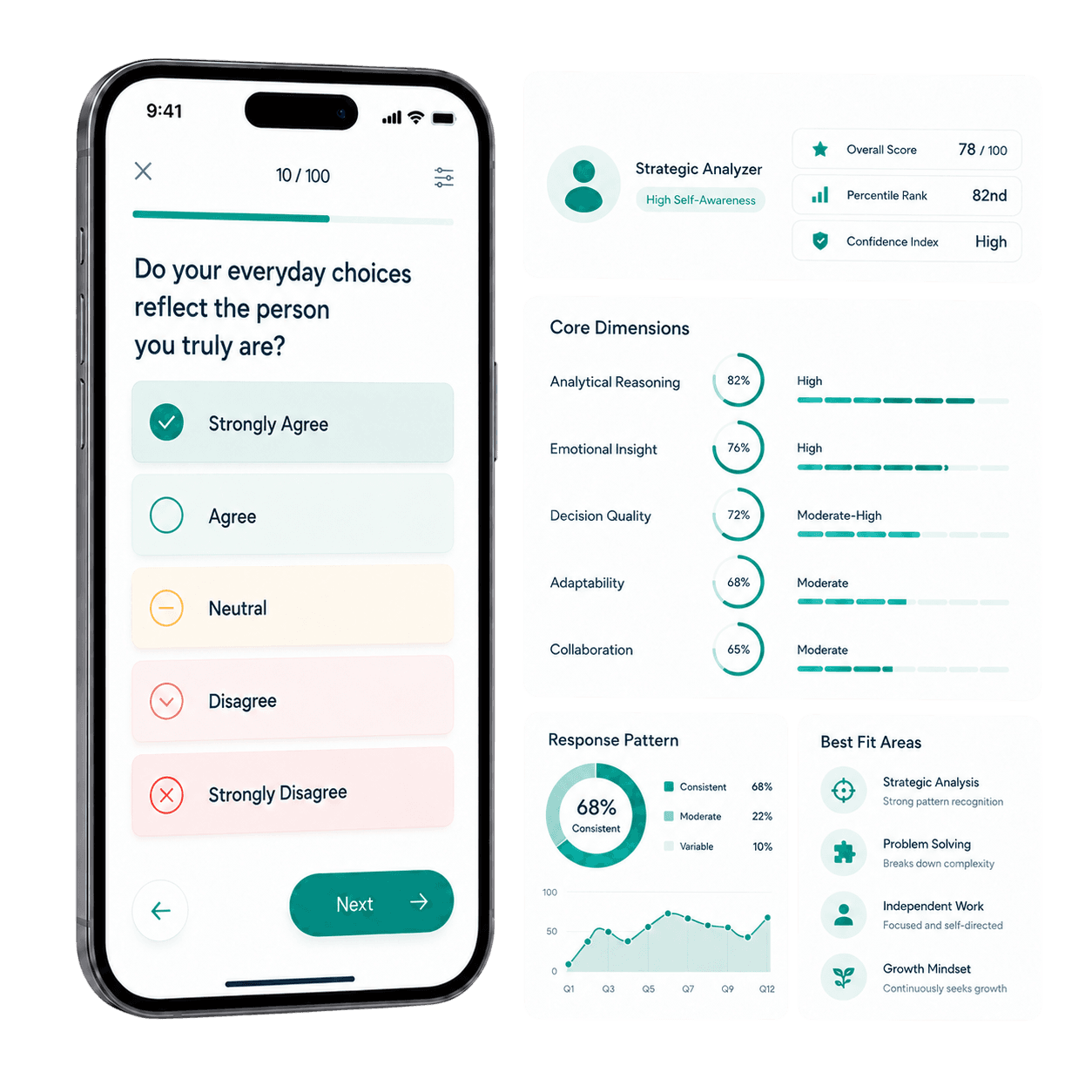
TestCore Autism Test and personalised report preview

Turn separate difficulties into one pattern you can actually inspect

TestCore looks at self-reported traits across social communication, sensory experience, routine and change, focused interests, attention to detail and everyday functioning.

Connect social, sensory and routine friction

A hard group conversation, a crowded room and a disrupted plan may feel like three unrelated problems. The test puts those experiences beside each other so you can see whether they belong to a broader recurring pattern.

  • Social effort and communication
  • Sensory load and recovery
  • Routine, predictability and change

Separate coping well from finding something easy

Getting through a situation does not show how much preparation, monitoring, suppression or recovery it required. That hidden cost can matter when you decide which experiences deserve closer attention.

  • What the situation looked like outside
  • What it required from you inside
  • What happened afterwards

Use the result to choose the next useful question

The outcome is one overall autism-traits level plus a detailed report. Use it to decide what seems worth accommodating, tracking, discussing or taking into a professional assessment if the pattern has a meaningful effect on daily life.

  • A clearer description of the pattern
  • The contexts that change it
  • A realistic next step

How it works

1

Answer from recurring real situations

Think across work or study, home, social interaction, sensory environments, changes of plan, routines and focused interests rather than one unusually easy or difficult day.

2

Get one overall autism-traits level

Your responses are combined into a single result from Minimal Traits to Strong Traits. TestCore does not return separate clinical domain scores or a diagnostic verdict.

3

Read the report against the places where life feels most costly

Compare the explanation with the situations that use the most energy, the supports that change the outcome and the patterns that have followed you over time.

Frequently asked questions

Q

Is this the AQ, AQ-10, AQ-50 or RAADS-R?

No. TestCore uses its own self-report questionnaire and scoring model. The result should not be interpreted as an AQ, RAADS-R or other validated clinical screening score.

Q

What result does the Autism Test return?

Your answers produce one overall autism-traits level: Minimal, Mild, Moderate, Elevated or Strong Traits. The detailed report then gives that result context across several areas of everyday life.

Q

What if I cope well in public but need a lot of recovery afterwards?

Include the effort behind the outcome. Some adults adapt or mask in ways that make difficulties less visible. Preparation, conscious monitoring and recovery can still be important parts of the pattern you are trying to understand.

Q

Can anxiety, ADHD, stress or other factors look similar?

Yes. Some experiences overlap across different conditions and life circumstances. This self-report cannot determine the cause by itself.

Q

Can the Autism Test diagnose autism?

No. Diagnosis requires a broader professional assessment that considers developmental history, persistent patterns across settings, daily impact and other possible explanations.

Q

What should I do with the result?

Use it to make your own examples more precise. If the pattern is persistent and meaningfully affects daily life, those concrete examples can also make a professional assessment conversation more useful.

The pattern is often clearest in the gap between performance and effort

Finishing the day does not tell you how much interpretation, sensory filtering, planning or recovery it took. The report is most useful when you compare the visible outcome with the cost behind it.

Notice the effort behind ordinary-looking situations
Compare what changes with structure, direct communication and lower sensory load
Keep mixed evidence instead of forcing every trait to fit
Use professional assessment for diagnosis or clinical support
See your autism traits pattern
Takes around 10 minutesPrivate and secure