
Testcore

Take the depression test and see what has changed, what it is costing, and what deserves attention next.

Low mood is only one part of the picture. Loss of interest, low energy, sleep changes, withdrawal, self-critical thoughts and ordinary tasks becoming harder can matter just as much. This private test helps you look at those changes together without treating the result as a diagnosis.

Fast results
Secure
Private
Trusted by thousands of curious users
Rated 4.8/5by our users
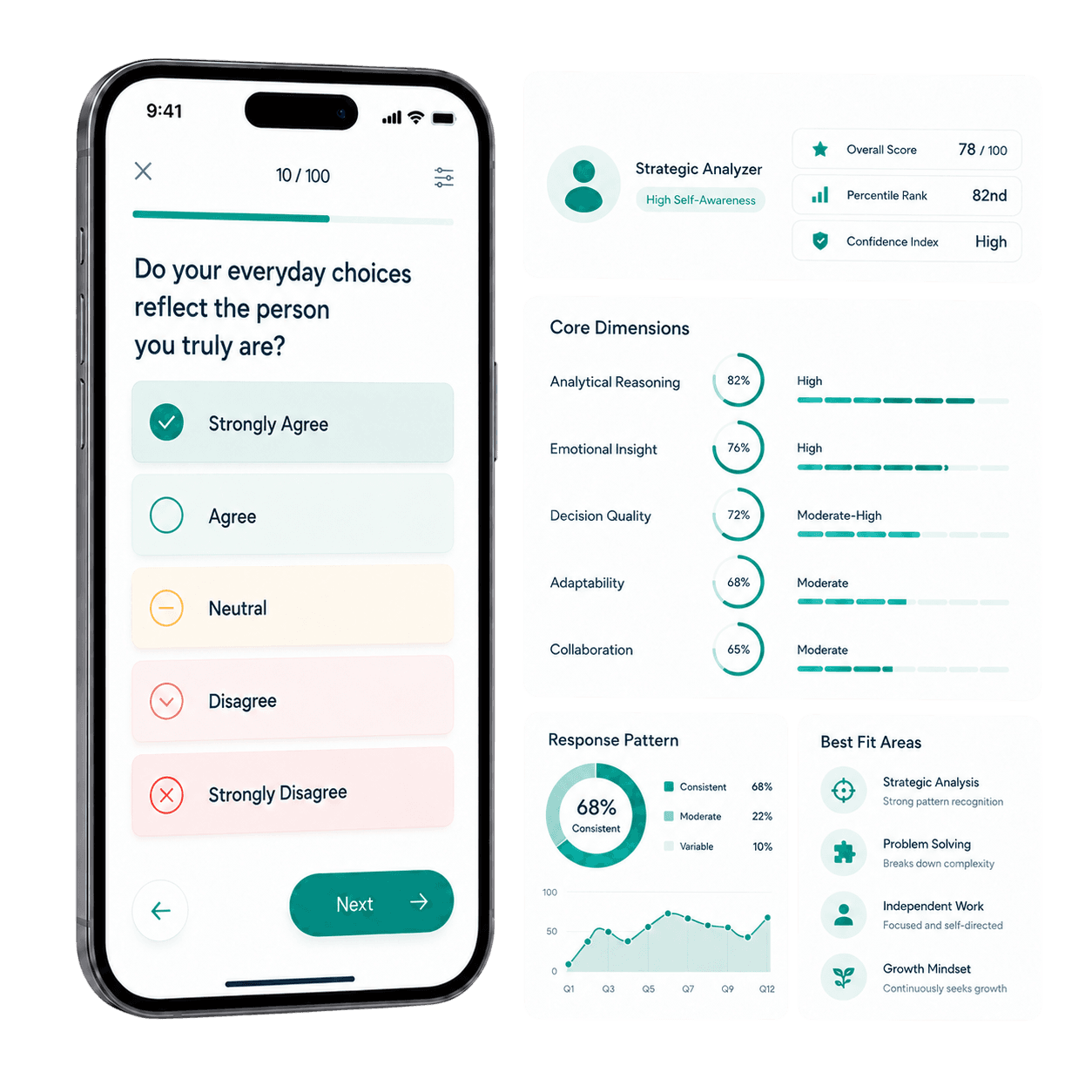
TestCore Depression Test and personalised report preview

Get clearer on the part that matters in real life

The useful question is not whether one difficult feeling sounds familiar. It is whether several changes are becoming persistent enough to affect how you function, connect and get through the day.

Identify what has changed

Look across mood, interest, energy, sleep, motivation, self-view and connection instead of reducing the whole experience to sadness alone.

  • What feels different from your usual baseline
  • Which changes keep showing up
  • What is becoming harder to ignore

See where the impact is landing

Notice whether the pattern is starting to interfere with work or study, relationships, routines, self-care, concentration or the activities that normally make life feel worthwhile.

  • Daily functioning
  • Connection and follow-through
  • The areas carrying the biggest cost

Choose the next useful response

Use the result to decide what needs monitoring, what deserves a conversation, and when professional support would be more useful than trying to push through alone.

  • A clearer description of what is happening
  • A realistic next conversation or action
  • Support when the pattern is persistent or unsafe

How it works

1

Answer from recent everyday experience

Think about what has generally been true rather than one unusually good or bad day. The goal is an honest snapshot of what has been changing.

2

Bring the separate changes into one result

Your answers are considered together so low mood, reduced interest, energy, self-view, sleep, motivation and daily impact are easier to see as a broader pattern.

3

Use the result to decide what comes next

Treat the result as information, not a verdict. Pay attention to persistence, disruption and safety, then decide whether reflection, a conversation or qualified support is the right next step.

Frequently asked questions

Q

What does the Depression Test explore?

It asks about depression-related experiences including mood, interest, energy, sleep, motivation, self-view, connection and everyday functioning. The result brings your responses together into an overall level for reflection.

Q

Is this Depression Test a diagnosis?

No. TestCore does not diagnose depression and is not a substitute for professional assessment. A qualified clinician can consider your history, health, current circumstances, safety and other possible explanations.

Q

What if I am still functioning at work or school?

Functioning does not automatically mean everything is fine. It can still be useful to notice whether ordinary responsibilities are taking much more effort, whether interest and connection have changed, or whether the pattern is becoming harder to carry.

Q

Can the test tell me what is causing these changes?

No. Stress, grief, physical health, medication, sleep disruption, substance use and other mental-health conditions can overlap with depression-related experiences. The test can organise what you report, but it cannot determine the cause.

Q

When should I consider professional support?

Consider qualified support when the experiences are persistent, worsening, significantly affecting daily functioning or leaving you unsure how to cope. A professional can assess factors an online result cannot see.

Q

What if I feel unsafe or have thoughts of harming myself?

Do not rely on an online test in an urgent situation. Contact local emergency services or a crisis service now, or reach out to a trusted person who can stay with you while you get immediate help.

A depression result is most useful when it changes what you pay attention to next.

Look for the practical signal: what changed, how persistent it has become, what it is disrupting and whether you need more support than self-reflection can provide.

Changes in mood, interest, energy and sleep considered together
The real-life cost across work, relationships, routines and self-care
Clearer language for a conversation with someone you trust or a professional
A private result that stays in proportion: useful information, not a diagnosis
Start Depression Test
Takes around 10 minutesPrivate and secure