
Testcore

Map the worry loop from the first concern to the moment it starts all over again.

A worry often has a sequence: something feels uncertain, possibilities multiply, you look for certainty or relief, and the mind settles — until the next doubt reopens the same question. This test helps you examine that sequence in the wider context of anxiety.

Fast results
Secure
Private
Trusted by thousands of curious users
Rated 4.8/5by our users
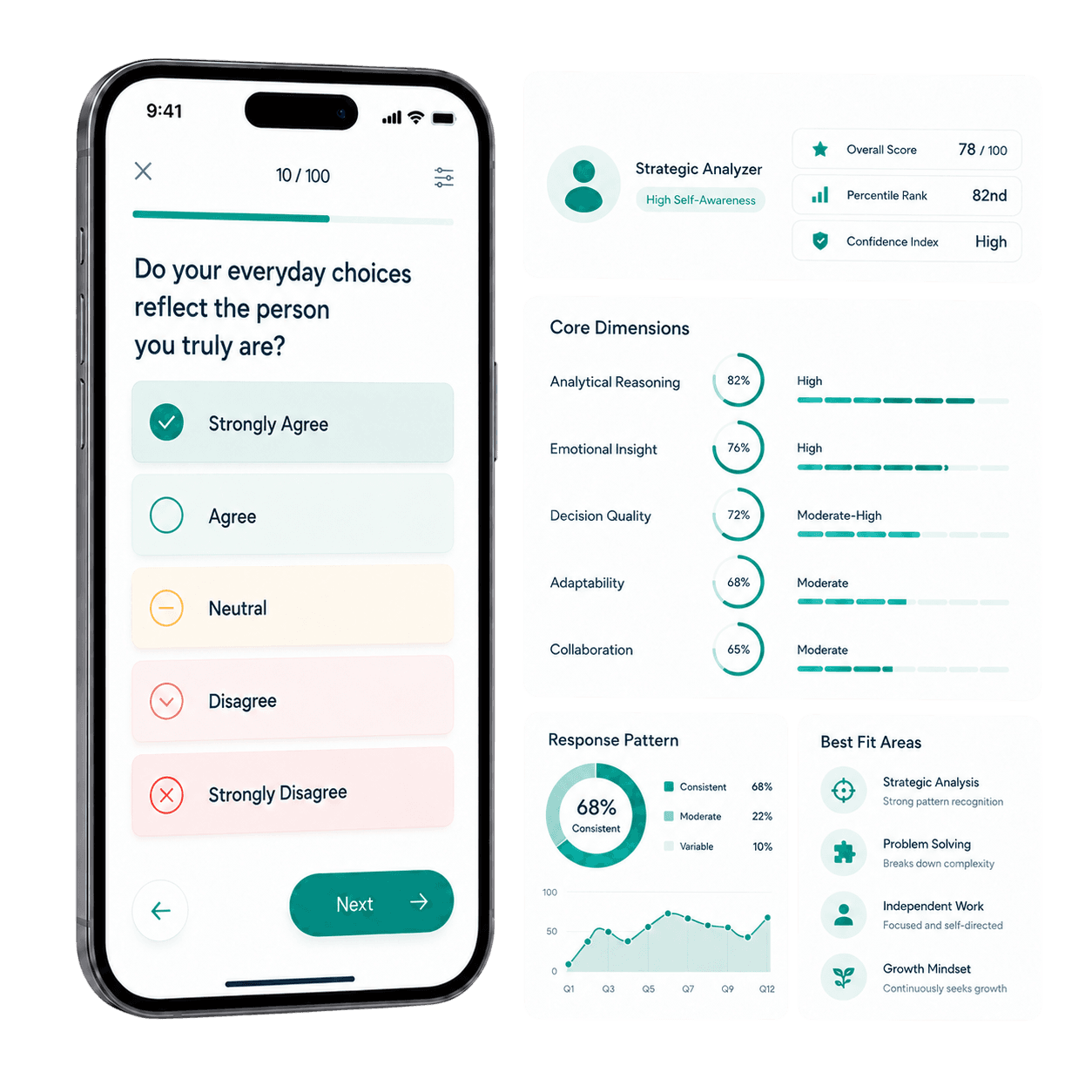
TestCore Worry Patterns Test and personalised report preview

Worry becomes easier to understand when you follow the sequence

Instead of asking only what you worry about, look at how the process unfolds: what starts it, how the thought expands, what you do for relief, and how long that relief lasts.

Find what starts the loop

Notice the triggers that repeatedly pull your attention towards possible problems: an unanswered message, a decision, a future event, a mistake you might have made, or an outcome you cannot control.

  • The situations that repeatedly trigger worry
  • The first thought that opens the loop
  • Whether the concern is present or future-focused

Track how the worry expands

Look at whether one concern turns into several scenarios, mental rehearsal, repeated checking, reassurance-seeking, or another round of analysis meant to make the situation feel safer.

  • How quickly possibilities multiply
  • What you do to feel more certain
  • Whether relief lasts or the doubt returns

See what the loop changes in daily life

Your report puts the overall anxiety-traits result into context across stress, relationships, communication, work, and decisions so you can see what the worry pattern actually costs.

  • Time and attention absorbed by worry
  • Decisions or situations you delay or avoid
  • Where the pattern matters most in real life

How it works

1

Answer from worries you recognise

Think about recurring concerns rather than the most dramatic example. Pay attention to what happens after the first worry appears and what you normally do next.

2

See worry inside the wider anxiety pattern

The questionnaire combines worry-related answers with physical tension, social situations, uncertainty, and avoidance into one overall anxiety-traits level rather than a separate worry score.

3

Identify where the loop can be interrupted

Use the report to notice whether the key point is the first prediction, the search for certainty, the reassurance habit, the avoidance, or the tendency to reopen a question after it has already been answered as well as possible.

Frequently asked questions

Q

What is a worry pattern?

It is the recurring sequence around worry rather than the topic alone: what triggers the concern, how your thinking develops, what you do to reduce uncertainty or discomfort, and whether the worry then returns.

Q

Is worrying always a problem?

No. Worry can draw attention to genuine risks and prompt useful action. It becomes more important to examine when it is difficult to stop, repeatedly expands beyond the available evidence, or consumes substantial time and energy without improving what you can do.

Q

Will I get a separate worry score?

No. Worry-related questions contribute to one overall anxiety-traits result. TestCore does not return a separate worry or rumination subscore.

Q

Why can reassurance help only for a short time?

Reassurance can reduce uncertainty in the moment, but if the underlying goal becomes feeling completely certain, a new doubt may reopen the same concern later. The pattern matters more than any one reassurance-seeking action.

Q

Is the Worry Patterns Test a diagnosis?

No. It is an educational self-report. It cannot diagnose an anxiety disorder or determine why a worry pattern exists.

Q

When should I consider additional support?

Consider professional support when worry is persistent, difficult to control, or substantially affecting sleep, concentration, work, relationships, daily functioning, or safety.

The topic of the worry changes. The process can stay remarkably similar.

Today it may be work, tomorrow a relationship, next week a health concern or a decision. Following the sequence can reveal what remains constant even when the subject changes.

Identify the triggers that reliably open the worry loop
Notice how quickly one concern becomes several imagined outcomes
Track which checking, reassurance, preparation, or avoidance behaviours provide only temporary relief
Use the overall anxiety result to see whether recurring worry is one part of a broader pattern
Map your worry pattern
Takes around 10 minutesPrivate and secure