Testcore

See when self-focus protects your priorities and when it pushes other perspectives out

Attention to your own needs is not automatically a problem. The useful question is whether your goals, feelings and self-image still leave enough room to listen, share influence, accept feedback and notice what another person needs from the interaction.

Fast results
Secure
Private
Trusted by thousands of curious users
Rated 4.8/5by our users
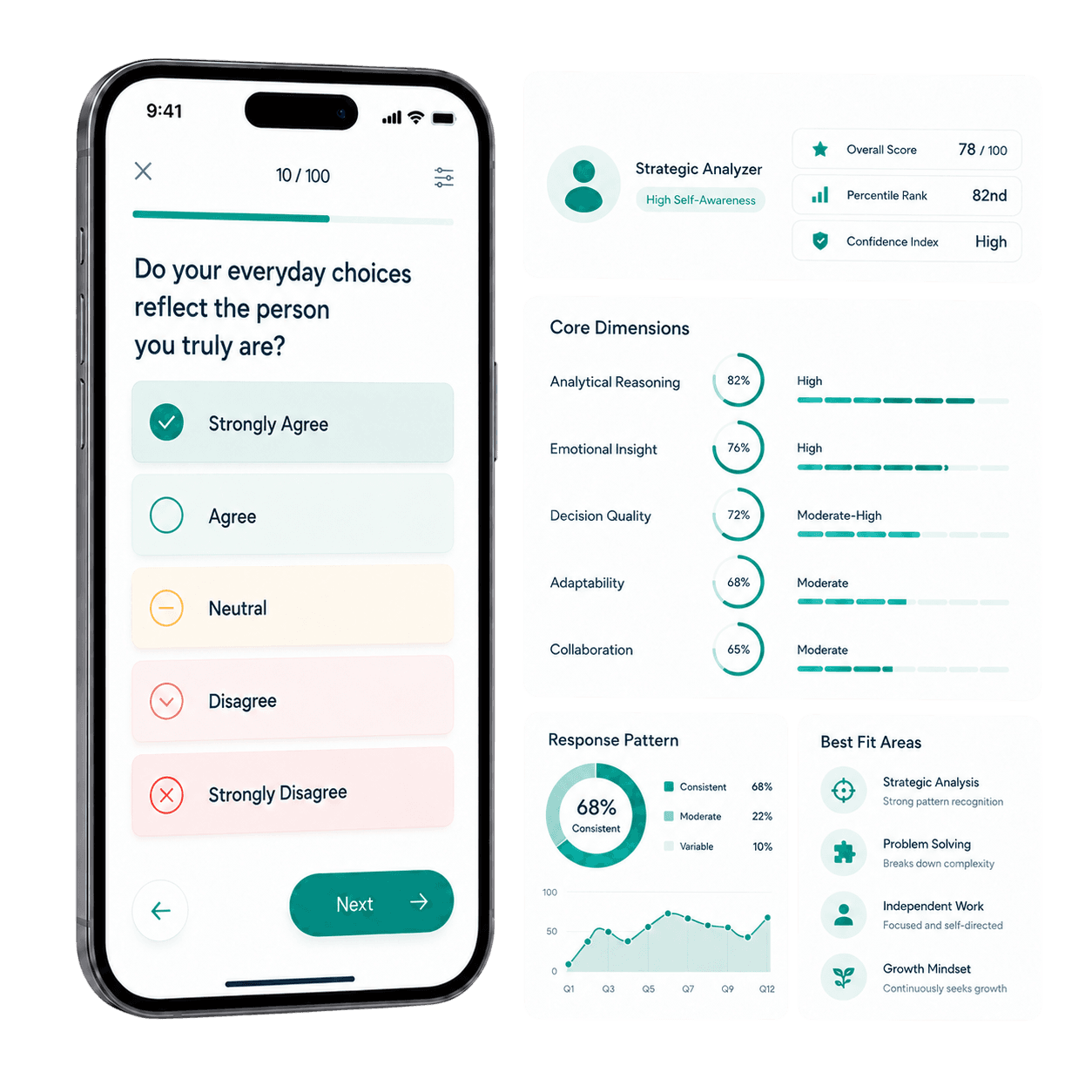
TestCore Self-Focus Test and personalised report preview

Measure self-focus by what it changes in the interaction

The broader narcissistic-traits assessment includes self-focus, listening, empathy, dominance and recognition-related tendencies that can help you examine where healthy self-regard becomes too narrow a frame.

Notice where your attention goes first

During conflict or disappointment, ask whether you can still register the other person's point of view or whether your own hurt, goals or status immediately take over the frame.

  • Attention
  • Perspective
  • Emotional space

Watch how self-focus changes conversation

Look for interrupting, redirecting the topic to your own experience, needing to lead, dismissing feedback or treating compromise as a loss of control.

  • Listening
  • Conversation balance
  • Shared influence

Keep self-respect without losing reciprocity

Use the result to protect legitimate needs while making deliberate room for another person's information, limits and priorities.

  • Self-respect
  • Empathy
  • Reciprocity

How it works

1

Answer from moments where needs compete

Think about disagreements, shared decisions, conversations about someone else's problems, leadership situations and times when you wanted attention or recognition too.

2

Read self-focus inside the broader narcissistic-traits result

The assessment includes direct self-focus, listening, empathy and dominance items, but the final result is one overall range rather than a dedicated self-focus sub-score.

3

Widen the frame in one recurring situation

Choose a moment where your own perspective usually takes over and add one deliberate step: ask, listen, summarise the other view or delay your response before deciding what happens next.

Frequently asked questions

Q

What does self-focus mean in this test?

It refers to how strongly your own needs, goals, image and experiences dominate attention compared with listening to and making room for other people's perspectives. Some self-focus is normal and useful.

Q

Is self-focus the same as selfishness?

Not necessarily. Focusing on your own needs can support boundaries, achievement and self-care. The concern is more practical: whether that focus repeatedly reduces reciprocity, empathy or willingness to consider other information.

Q

Does a high self-focus result mean I am a narcissist?

The product does not return a separate self-focus score, and no single tendency can diagnose narcissistic personality disorder. The broader result is for self-reflection on narcissistic traits.

Q

Can healthy confidence include strong self-focus?

Yes. Goals and self-respect require some attention to yourself. The key distinction is whether self-focus remains flexible enough for feedback, shared decisions and another person's needs.

Q

Do I get a separate self-focus score?

No. Self-focus is directly represented in the questionnaire, but the final assessment gives one overall narcissistic-traits range rather than a standalone numeric sub-score.

Q

How should I use the result?

Choose one situation where conversations or decisions become overly centred on your own perspective and practice one behaviour that deliberately reintroduces the other person's information before you respond.

Healthy self-focus keeps your needs visible without making them the only information in the room

The practical target is not self-erasure. It is enough flexibility to protect your own priorities while still listening, sharing influence and responding to what another person is actually bringing.

Notice when your perspective becomes the default perspective
Keep boundaries without turning them into control
Listen long enough to receive information you did not already have
Make room for reciprocity before the interaction hardens
Explore your self-focus pattern
Takes around 10 minutesPrivate and secure