
Testcore

See whether secure attachment habits still hold when the relationship is under pressure.

Security is easy to claim when nothing is wrong. The stronger test is what happens when you need reassurance, depend on someone, hear criticism, set a boundary or repair after conflict. TestCore helps you see whether steadier habits remain available in those moments — and what tends to interrupt them.

Fast results
Secure
Private
Trusted by thousands of curious users
Rated 4.8/5by our users
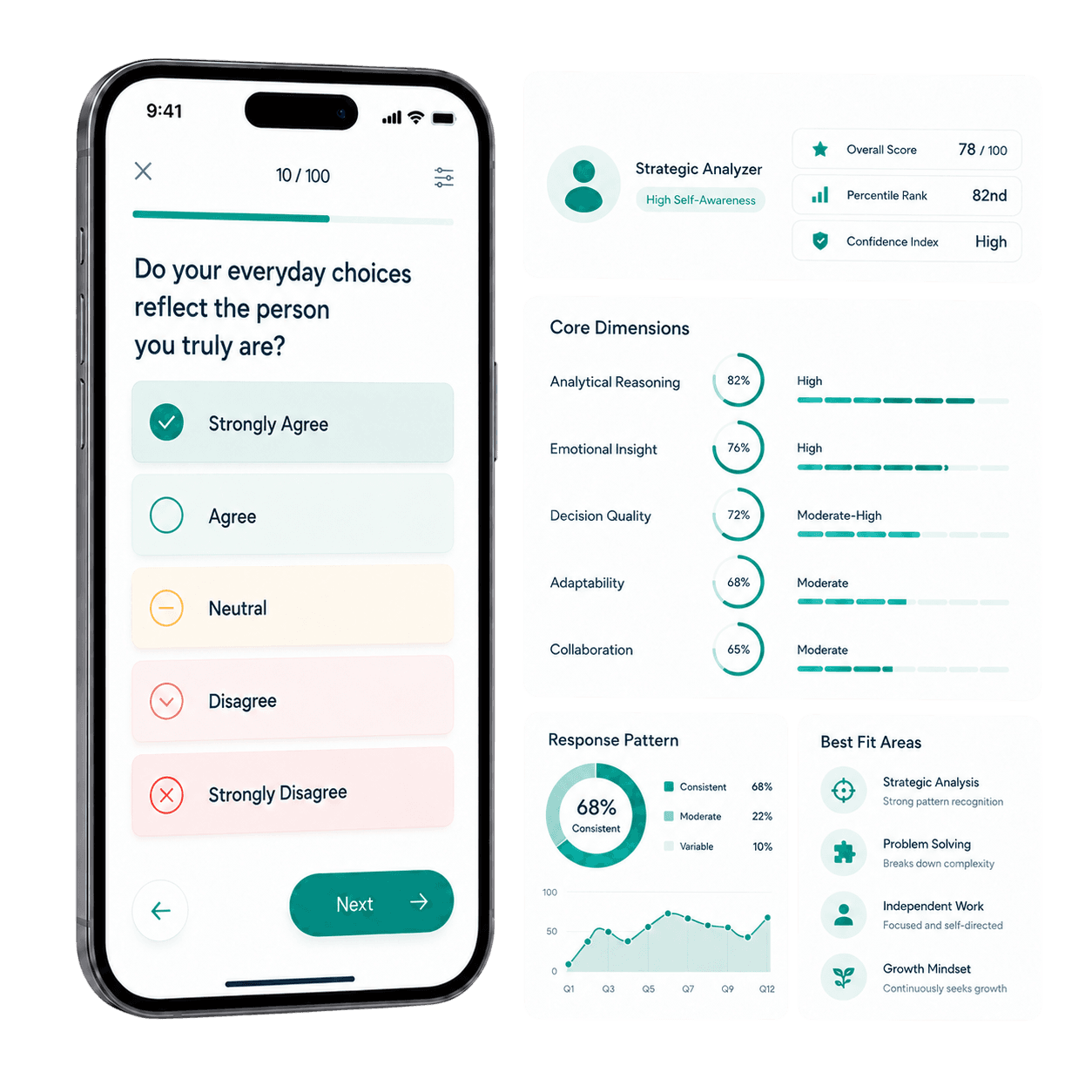
TestCore Secure Attachment Test and personalised report preview

Security shows up in what you can still do when connection feels uncertain

This page focuses on the habits associated with steadier attachment: trust without blind certainty, direct communication, healthy dependence, boundaries, emotional regulation and repair.

Check whether you can stay connected without losing yourself

Secure relating allows closeness and independence to coexist. Notice whether you can care deeply, ask for support and remain yourself rather than treating connection and autonomy as opposites.

  • Closeness without engulfment
  • Independence without detachment
  • Support without shame

See what happens when security is tested

A request for space, disagreement or delayed reassurance can expose the gap between calm intentions and automatic protection. The useful question is whether you can tolerate uncertainty long enough to respond deliberately.

  • Trust under stress
  • Direct requests
  • Boundaries without rejection

Find the secure habit that needs strengthening

You do not need a perfect 'secure' identity. The result can show which steadier habits are already available and which situations still pull you toward pursuit, withdrawal, fear or inconsistency.

  • What already works
  • Where security drops
  • What to practise next

How it works

1

Answer from calm moments and stressful ones

Think about trust, support, closeness, boundaries and repair when the relationship feels steady as well as when uncertainty or conflict raises the stakes.

2

Get the leading attachment profile

The questionnaire compares five profiles, including The Secure Connector. It does not return a standalone secure percentage or separate security score.

3

Use the report to find what supports steadier connection

If the secure profile leads, examine what helps it hold. If another profile leads, look for the situations where secure habits are still present and where protection tends to replace them.

Frequently asked questions

Q

Will this test give me a secure attachment score?

No. TestCore compares your responses across five attachment profiles and returns the strongest profile. One of those profiles is The Secure Connector, but there is no separate secure percentage or clinical security score.

Q

What does secure attachment look like in adults?

Common secure tendencies include comfort with closeness and healthy dependence, the ability to communicate needs and boundaries, trust that is not easily destabilised, and willingness to repair after conflict.

Q

Can a securely attached person still need reassurance or space?

Yes. Security does not mean having no needs, fears or limits. The difference is often how directly those needs can be communicated and whether uncertainty can be tolerated without the relationship immediately feeling unsafe.

Q

What if I feel secure in some relationships but not others?

That is useful context. Trust, consistency, stress and relationship history can affect attachment-related responses. Keep the contrast visible when you interpret the leading profile.

Q

Can insecure patterns become more secure?

Yes. Attachment patterns can shift with experience, safer relationships, self-awareness, deliberate communication and therapy.

Q

Is secure attachment a diagnosis or guarantee of relationship success?

No. Attachment profiles are relationship tendencies, not diagnoses, and no attachment result can guarantee compatibility, safety or a successful relationship.

Secure attachment is not a perfect score. It is access to steadier choices when the stakes rise.

The most useful question is not whether you can look secure when everything is easy. It is whether trust, direct communication, boundaries, healthy dependence and repair remain available when uncertainty activates old protective habits.

Notice which secure habits are already reliable
Find the situations where those habits disappear
Treat reassurance and space as needs to communicate, not proof of failure
Use the result to strengthen the earliest steadier response available to you
Explore your secure attachment habits
Takes around 10 minutesPrivate and secure