Testcore

See how risk and impulse change when the stakes rise and consequences arrive later.

Enjoying challenge is not the same as acting impulsively. This assessment looks at attraction to risk, speed of action and consequence awareness as part of a broader psychopathy-traits pattern; it does not return a standalone risk-taking or impulsivity score.

Fast results
Secure
Private
Trusted by thousands of curious users
Rated 4.8/5by our users
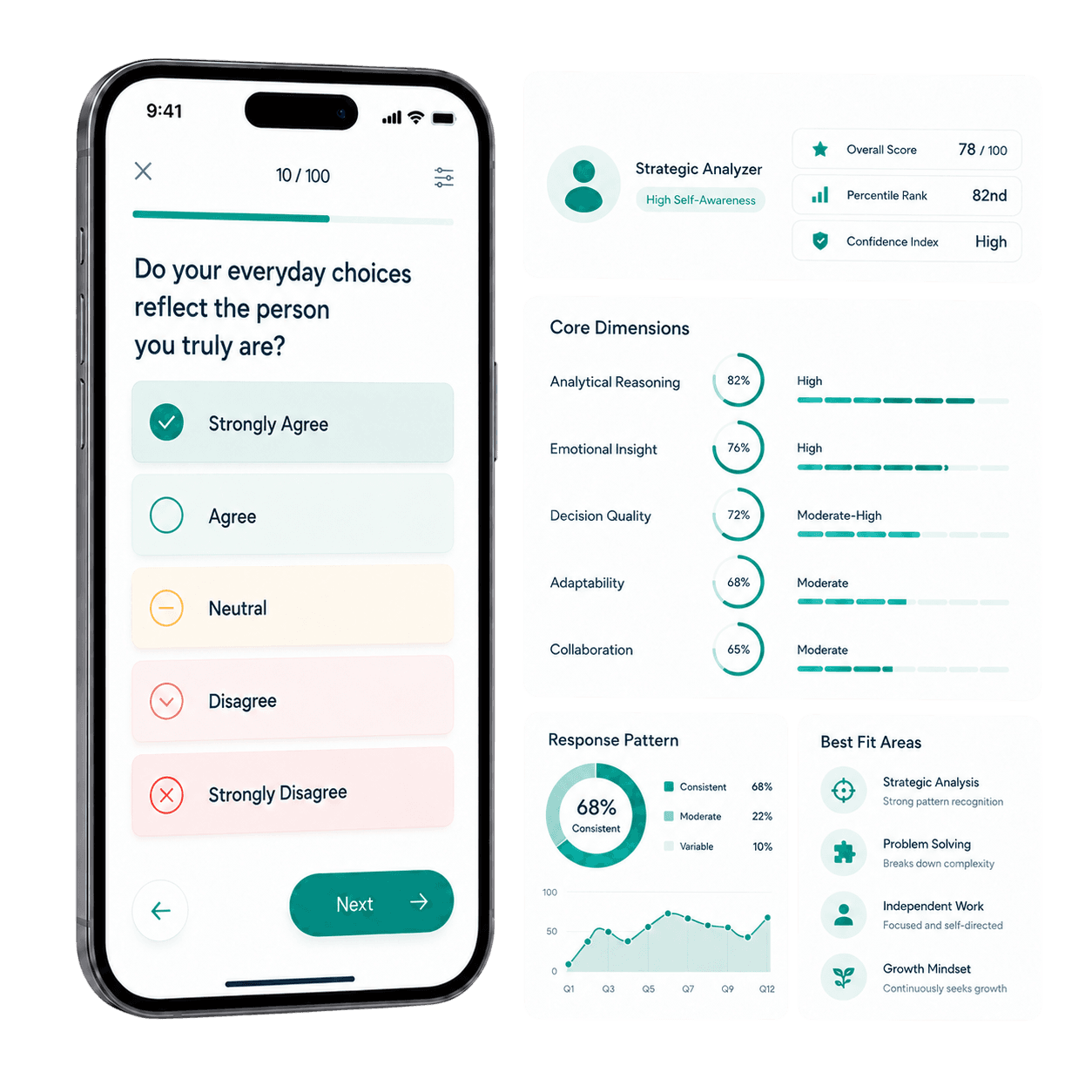
TestCore Risk and Impulse Test and personalised report preview

The useful distinction is what happens between the opportunity and the consequence

Risk can be deliberate or impulsive. The assessment includes both comfort with high stakes and questions about acting without considering consequences, allowing you to examine the decision sequence rather than treating every bold choice as the same thing.

Separate calculated risk from fast action

A calculated risk includes deliberate consideration of what could happen. Impulsive action shortens or bypasses that step. Think about whether you usually slow down when the potential cost becomes real.

  • How attractive high stakes feel
  • How much reflection happens before acting
  • Whether urgency changes the process

Include consequences for other people

Risk is not only personal. A decision may affect colleagues, partners, family or people who did not choose the stakes. Notice how much their potential cost enters the calculation when your own gain is attractive.

  • Who else absorbs the downside
  • How much their needs influence the choice
  • Whether personal gain shifts the balance

Use the aftermath as evidence

The next decision matters too. Does a bad outcome lead to reflection, regret and adjustment, or does the same high-speed pattern return with little change? Repetition is more informative than one gamble that happened to work or fail.

  • Accountability after the outcome
  • Whether regret changes behaviour
  • What repeats the next time stakes rise

How it works

1

Answer from choices where there was something real to gain or lose

Think about money, work, conflict, competition, relationships and other situations where speed, excitement or personal benefit could pull against caution.

2

Keep risk and impulse inside the broader product result

Your answers contribute to one overall psychopathy-traits range alongside emotional and interpersonal themes. TestCore does not return a dedicated risk or impulsivity sub-score.

3

Find the practical pause point

Use the report to identify where an extra moment of consequence review, perspective-taking or accountability could change a repeated decision pattern.

Frequently asked questions

Q

Does this test give me an impulsivity score?

No. Risk-taking and impulsivity appear among the assessment themes, but the product returns one overall psychopathy-traits result rather than a dedicated impulsivity score.

Q

Is taking risks automatically a psychopathic trait?

No. Risk-taking occurs for many reasons and can be deliberate or adaptive. The broader pattern matters when risk is considered alongside impulsivity, empathy, self-interest, responsibility and consequence awareness.

Q

What is the difference between risk tolerance and impulsivity?

Risk tolerance describes willingness to accept uncertainty or possible loss. Impulsivity concerns acting quickly or with insufficient consideration. A person can be comfortable with risk while still making deliberate decisions.

Q

Can impulsive behaviour have causes unrelated to psychopathy?

Yes. Impulsivity is a broad behavioural feature that can appear in many contexts. This assessment cannot determine a single cause for impulsive decisions.

Q

Can the result predict whether I will make dangerous choices?

No. The assessment does not predict future dangerous behaviour, violence, accidents or criminal activity.

Q

What if risk-taking is the only issue I want to understand?

A dedicated impulsivity or risk-taking assessment may fit that narrower question better. This page uses risk and impulse as one part of a broader psychopathy-traits assessment.

A bold choice and an impulsive choice are not interchangeable

The practical value comes from mapping the decision: what made the option attractive, how much consequence review happened, who else carried risk, and what the outcome changed next time.

No promise of a dedicated risk-taking or impulsivity score
A clear bridge from risk and impulse questions to the broader psychopathy-traits result
Context for speed, stakes, self-interest and consequence awareness
A practical pause point for repeated high-cost decisions
Explore risk and impulse patterns
Takes around 10 minutesPrivate and secure