
Testcore

See what relationship sensitivity does when connection suddenly feels uncertain.

Closeness can feel deeply reassuring until a changed tone, delayed reply, disagreement, or need for space makes the relationship feel less secure. This test focuses on what happens next—emotionally, behaviorally, and relationally.

Fast results
Secure
Private
Trusted by thousands of curious users
Rated 4.8/5by our users
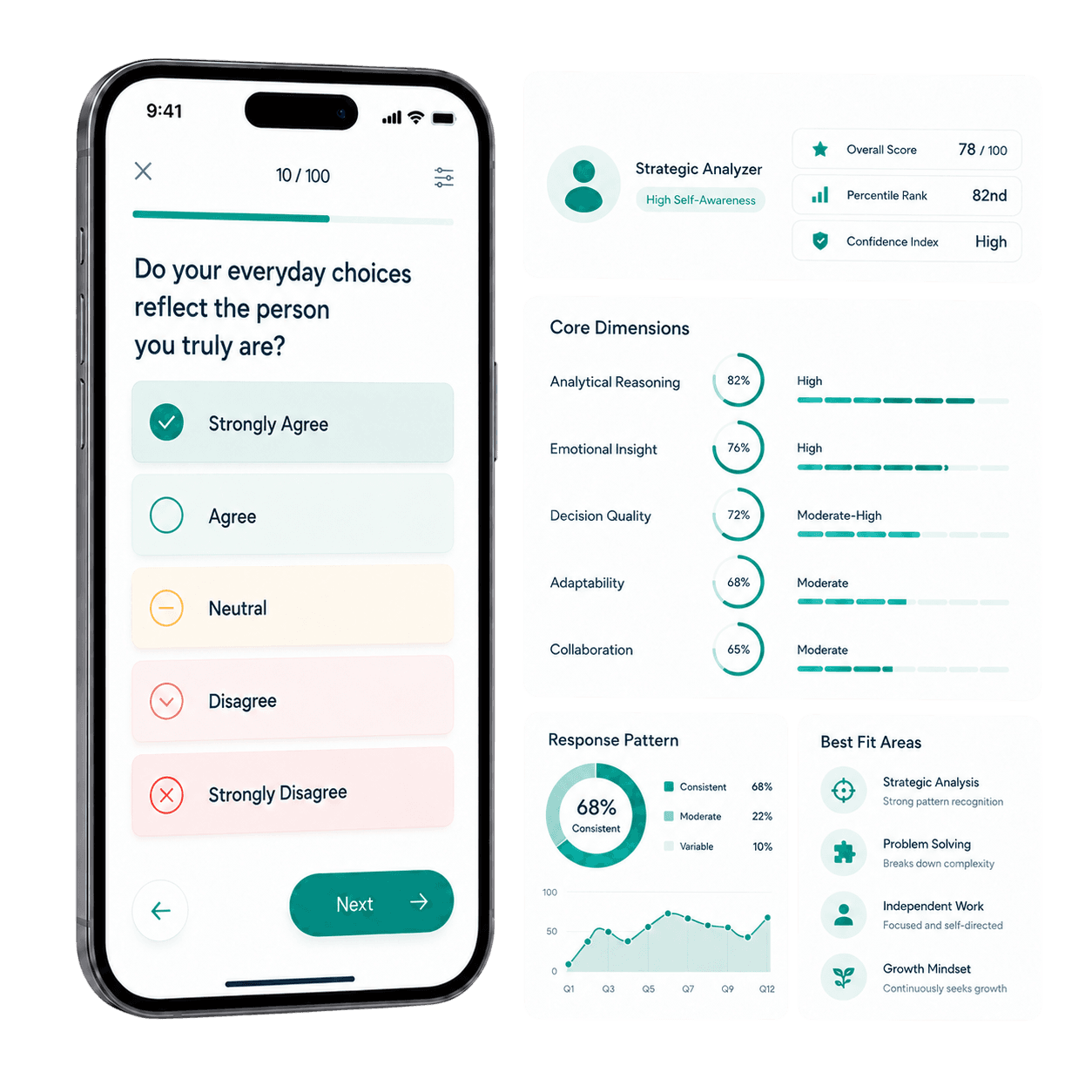
TestCore Relationship Sensitivity Test and personalised report preview

Sensitivity becomes easier to understand when you separate closeness from threat

This page looks at reassurance, perceived distance, conflict, boundaries, rejection sensitivity, and the push-pull responses that can appear when an important relationship feels unstable.

Identify what changes the meaning of the relationship

Pay attention to the moments when a neutral or ordinary change starts to feel like evidence that someone is withdrawing, rejecting, replacing, or misunderstanding you.

  • Distance and silence
  • Conflict and criticism
  • Uncertainty about where you stand

Track the response that follows

Relationship sensitivity may show up as urgent reassurance-seeking, anger, withdrawal, testing, idealizing and then devaluing someone, or pushing people away when you most want connection.

  • How you seek safety
  • How communication changes
  • What the other person experiences

Keep the relationship pattern in a wider context

The full BPD-traits assessment also considers identity, emotional regulation, impulsive behavior, anger, emptiness, and stress-related experiences. No relationship theme is treated as a diagnosis by itself.

  • A broader pattern
  • One overall traits result
  • More precise reflection

How it works

1

Answer across more than one relationship

Think about partners, friends, family, work relationships, periods of closeness, and moments of conflict or uncertainty.

2

Receive one overall BPD-traits level

Your answers are combined into a single level from Minimal Traits to Strong Traits. Relationship sensitivity is not reported as its own diagnostic score.

3

Compare connection, reaction, and aftermath

Use the report to see how relationship sensitivity interacts with emotional intensity, identity, behavior, communication, and recovery after conflict.

Frequently asked questions

Q

What does the Relationship Sensitivity Test explore?

It explores how closeness, perceived distance, reassurance, criticism, conflict, and fear of rejection may affect emotional security, communication, and behavior inside the broader BPD-traits assessment.

Q

Is relationship sensitivity the same as BPD?

No. Relationship sensitivity can appear with attachment insecurity, anxiety, trauma, low self-esteem, stressful relationships, and many other experiences.

Q

Will I receive a relationship-sensitivity score?

No. TestCore reports one overall BPD-traits level. Relationship themes are interpreted narratively in the report rather than scored separately.

Q

Why does the test ask about identity and impulsive behavior too?

Relationship stress can interact with self-image, emotional regulation, and behavior. The wider pattern gives more context than focusing on closeness alone.

Q

Can this test tell me whether I have borderline personality disorder?

No. Diagnosis requires a qualified mental health professional to assess persistent patterns, personal history, impairment, and other possible explanations.

Relationship sensitivity is not only about how much you care.

The useful pattern is how quickly connection starts to feel threatened, what meaning you assign to the change, how you respond, and what the response does to the relationship afterward.

Context for closeness, distance, and reassurance
A view of the push-pull sequence
One overall BPD-traits result rather than a relationship subscore
A private report based on your answers
Explore relationship sensitivity
Takes around 10 minutesPrivate and secure