Testcore

Find the point where thinking stops helping and starts keeping the worry alive.

Useful thinking moves a problem towards a decision. Overthinking keeps reopening the case: another possibility, another replay, another reason not to feel certain yet. This test helps you examine that pattern in the wider context of anxiety.

Fast results
Secure
Private
Trusted by thousands of curious users
Rated 4.8/5by our users
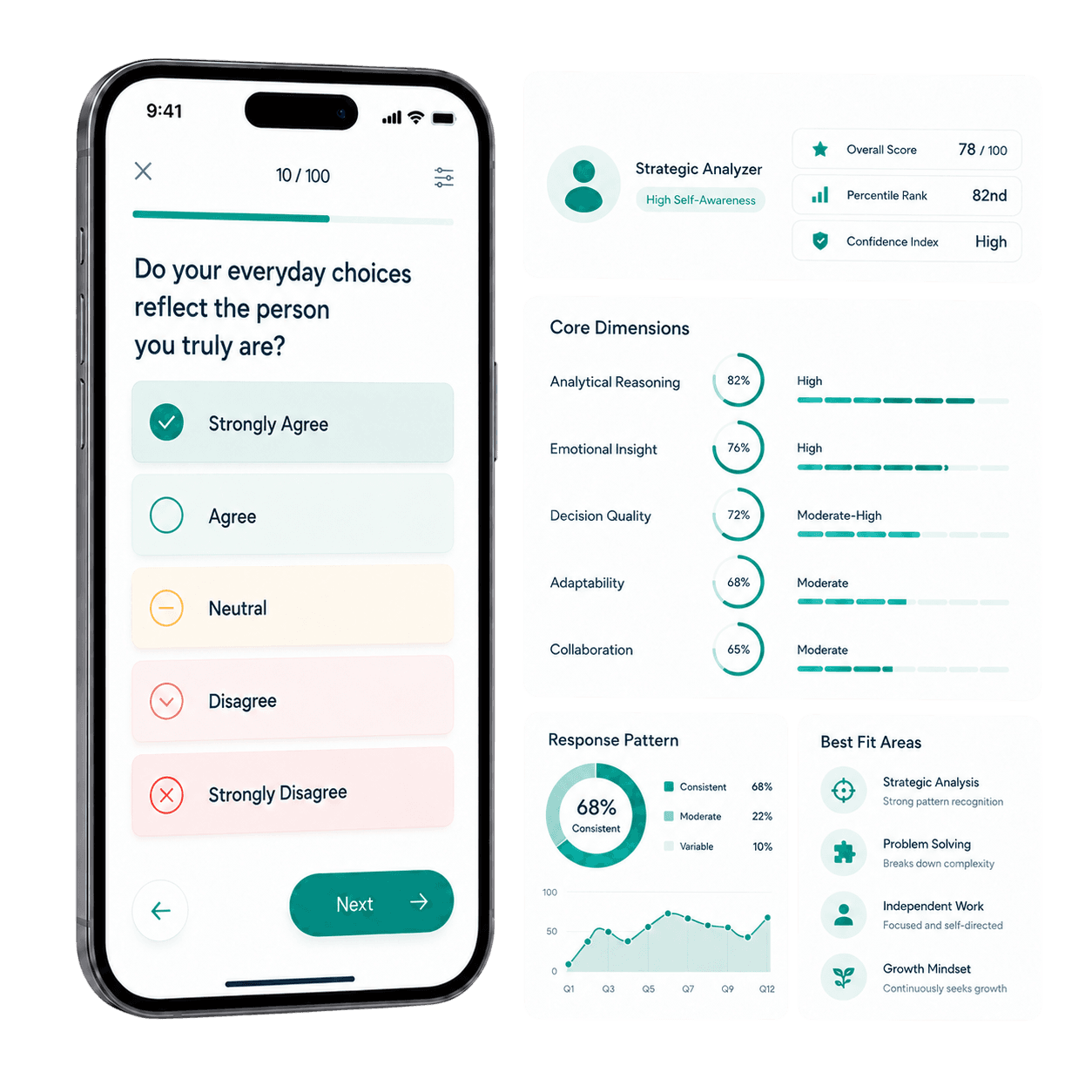
TestCore Overthinking and Anxiety Test and personalised report preview

The question is not how much you think. It is what the thinking does.

Analysis can solve a problem. Repetitive worry can consume the same energy without creating a better answer. TestCore helps you look at the difference in situations you actually recognise.

Separate problem-solving from mental replay

Notice whether more thinking produces new information or simply sends you back through the same conversation, decision, possible mistake, or worst-case outcome.

  • What-if thinking that keeps expanding
  • Conversations or choices you repeatedly revisit
  • The point where analysis stops adding value

See what keeps the loop open

Look at whether uncertainty, fear of getting something wrong, reassurance, checking, or avoidance makes it difficult to let a question stay imperfectly resolved.

  • The uncertainty underneath the loop
  • What gives temporary reassurance
  • What makes the thought return later

Measure the cost beyond the thought itself

Your overall anxiety-traits report gives context for how repeated thinking may relate to sleep, attention, confidence, relationships, work, and decision-making.

  • How much attention the loop consumes
  • Where indecision or delay appears
  • What changes when you finally act

How it works

1

Answer from the thoughts that actually return

Think about real decisions, conversations, plans, and uncertainties. Focus on whether your mind can move on once enough information is available.

2

Place overthinking inside the wider anxiety pattern

The questionnaire considers anxious thinking alongside physical tension, social unease, uncertainty, and avoidance. It produces one overall anxiety-traits result, not a separate overthinking score.

3

Look for the gap between thought and action

Use the report to see where analysis supports a decision and where the search for certainty mainly delays one, drains attention, or keeps a finished situation mentally active.

Frequently asked questions

Q

Is overthinking always a sign of anxiety?

No. Careful analysis, reflection, and planning can all be useful. This page focuses on repeated thinking when it overlaps with worry, uncertainty, tension, reassurance-seeking, indecision, or avoidance.

Q

What kinds of overthinking does the test include?

The anxiety questionnaire includes experiences such as persistent worry, worst-case thinking, replaying situations, difficulty mentally disengaging, and uncertainty-related patterns. These contribute to the overall result.

Q

Will I get an overthinking or rumination score?

No. TestCore returns one overall anxiety-traits level. It does not provide a separate overthinking, rumination, or metacognition subscore.

Q

How can I tell whether more thinking is still useful?

A practical question is whether the next round of thinking is producing new information or a concrete decision. If it mainly repeats the same possibilities without changing what you can do, the process may be serving reassurance more than problem-solving.

Q

Is the Overthinking and Anxiety Test a diagnosis?

No. It is an educational self-report, not a diagnostic assessment. Persistent or distressing anxiety-related experiences should be discussed with a qualified professional when they interfere with daily life.

Q

When should I consider additional support?

Consider professional support when worry or repetitive thinking is difficult to control, worsening, or substantially affecting sleep, concentration, work, relationships, daily functioning, or safety.

More certainty is not always available — even after more thinking

Overthinking often feels productive because the mind is busy. The useful test is whether that activity changes the decision, or only postpones the discomfort of making it without perfect certainty.

Notice when a decision stays mentally open after the practical choice is already clear
Separate useful preparation from checking and reassurance that provide only brief relief
Track whether replay changes anything or simply keeps a past situation emotionally active
Use the overall anxiety result to see whether overthinking sits inside a wider pattern of tension, uncertainty, or avoidance
Test your overthinking pattern
Takes around 10 minutesPrivate and secure