See what keeps returning
Notice which thoughts, urges or routines recur across ordinary situations rather than treating one unusual event as the whole story.
- Frequency across time
- Recurring uncertainty
- Repeated responses

A repeated check, an intrusive thought or a need for order can mean little by itself. The practical difference is whether the tendency keeps returning, feels difficult to resist, and starts consuming time, attention or flexibility.
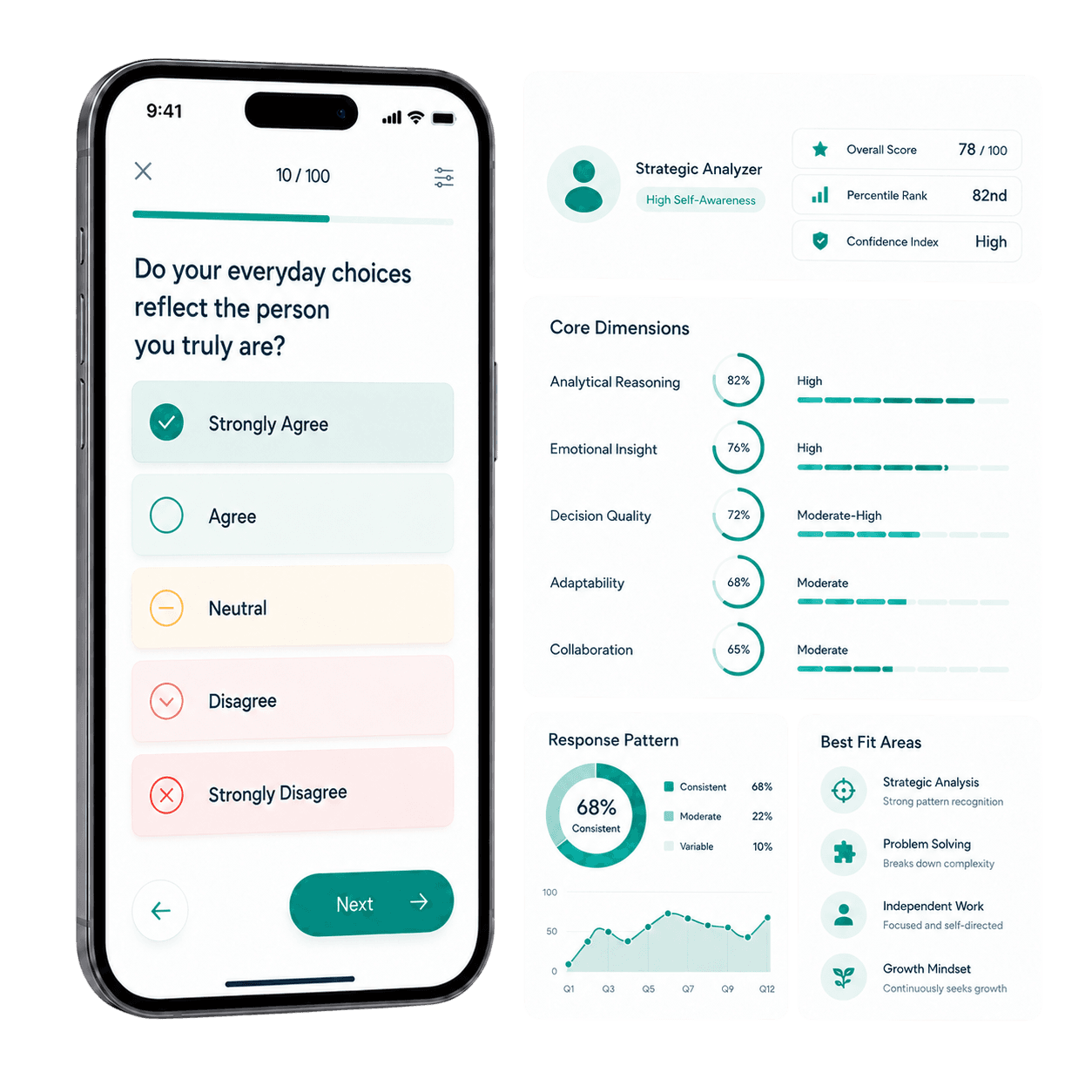
This route focuses on recurring tendencies across time: intrusive thoughts, doubt, checking, repetitive responses, routines and the need to feel certain or complete.
Notice which thoughts, urges or routines recur across ordinary situations rather than treating one unusual event as the whole story.
Identify where resisting a check, leaving a question open or stopping a routine creates more discomfort than you expect.
Compare recognition with practical impact: extra time, delayed decisions, mental fatigue, reassurance-seeking or reduced flexibility.
Think across normal weeks and familiar settings, not just your most stressful period or one isolated habit.
Your overall result is easier to interpret when you ask how often a pattern appears, how hard it is to leave alone and what it changes in daily life.
Take the result into the situations where the tendencies matter most and keep diagnosis separate from an online self-reflection score.
It explores recurring self-reported tendencies involving intrusive thoughts, rumination, checking, repetitive actions, routines, certainty-seeking, order and difficulty moving on when something feels unresolved.
No. Traits and a clinical diagnosis are not the same. Only a qualified professional can diagnose obsessive-compulsive disorder.
No. TestCore returns one overall result range and uses different themes to explain that range in context.
The broad route explains the full thought-response-relief cycle. This route focuses more narrowly on whether related tendencies recur across time and what practical cost they create.
Yes. Context matters. Repetition, distress, resistance, time cost and interference are more informative than the presence of one careful or orderly habit.
Consider qualified support when intrusive thoughts or repetitive responses are persistent, distressing or interfering with daily life.
The goal is not to turn carefulness, order or unwanted thoughts into a diagnosis. It is to identify recurring tendencies that may deserve attention because of the time, energy or flexibility they consume.