Notice who gets to define the interaction
Look at whether your view, priorities or emotional needs tend to become the default frame when there is disagreement or limited attention.
- Control
- Entitlement
- Shared influence
Close relationships reveal narcissism-related traits in practical ways: who gets the emotional space, how criticism is handled, whether attention feels reciprocal, and what happens when compromise threatens control or self-image.
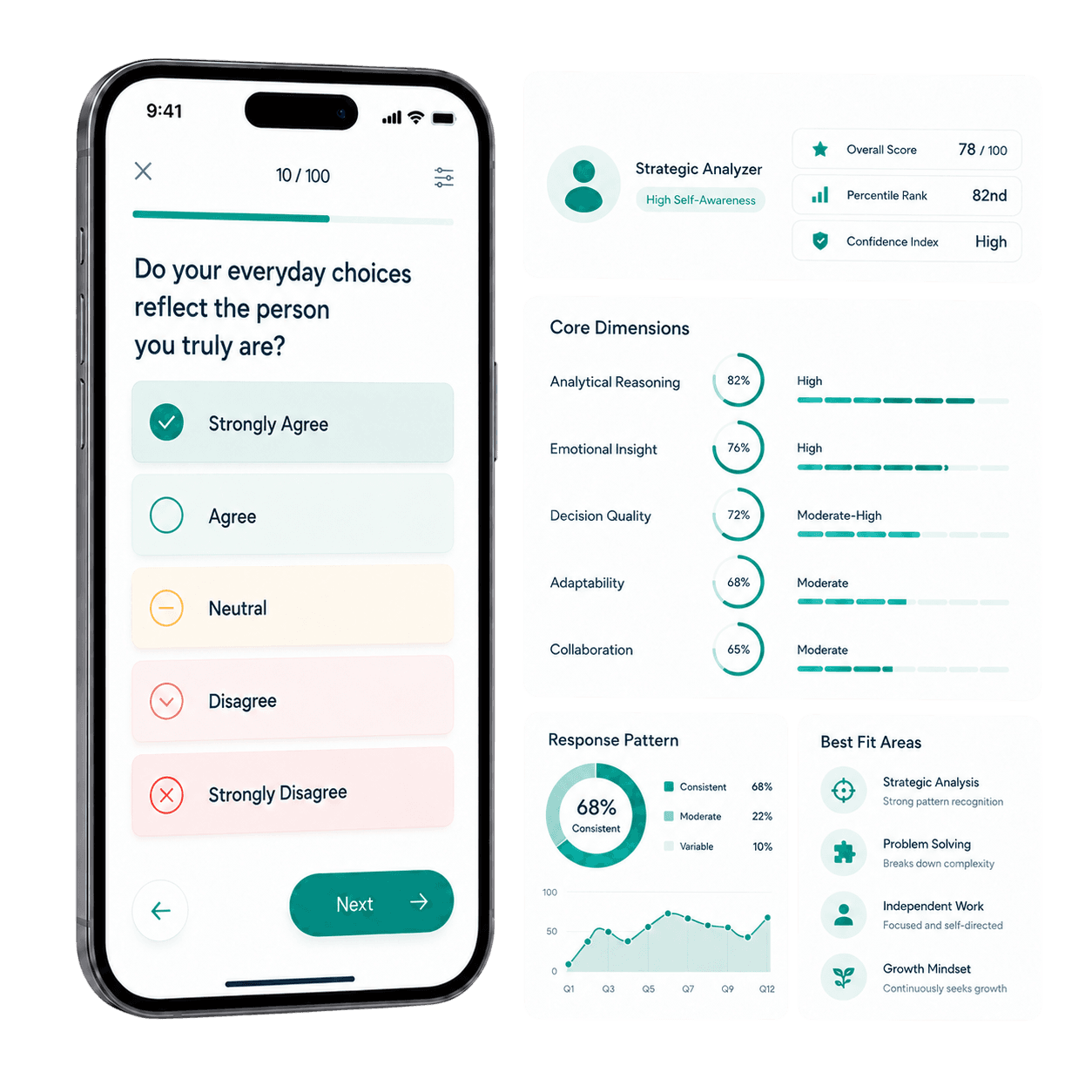
The assessment does not diagnose a partner or score relationship quality. It helps you examine your own tendencies around recognition, listening, criticism, reciprocity, control and empathy.
Look at whether your view, priorities or emotional needs tend to become the default frame when there is disagreement or limited attention.
See whether feedback leads to curiosity and repair or quickly becomes defensiveness, counterattack, withdrawal or a need to re-establish being right.
Ask whether the relationship leaves meaningful room for the other person's perspective, achievements, limits and needs — not only whether you believe you care about them.
Think about partners, family and close friends, especially moments involving criticism, reassurance, competition, boundaries, shared decisions and attention.
The assessment returns one overall narcissistic-traits range. The report adds relationship, empathy and communication context rather than a separate relationship-health score.
Use the report to catch a specific pattern earlier — interrupting, dismissing feedback, needing the last word, competing for attention or overlooking the other person's experience.
No. It is a self-report assessment about your own tendencies. It cannot diagnose or classify another person from your observations of their behaviour.
No. The product does not provide a relationship-quality, compatibility or abuse score. It gives an overall narcissistic-traits result that you can apply to your own relationship behaviour.
Relevant patterns can include strong validation needs, entitlement, difficulty with criticism, competition for attention, controlling behaviour, reduced reciprocity, self-focused conversation and limited room for another perspective.
No. Self-reflection and boundaries can coexist. Understanding your contribution to an interaction does not require excusing another person's harmful or unsafe behaviour.
No. It is an educational self-reflection tool and does not replace therapy, couples counselling or professional assessment.
Choose one behaviour you control and observe it during the next few important conversations. Specific change is more useful than using the result as a label in an argument.
The goal is not to win an argument about who is narcissistic. It is to see where self-image, validation or control reduces reciprocity and what you can do differently.