
Testcore

Find out what is happening when motivation and energy drop at the same time

Low drive is not always the same as low energy. You may still care about a goal but feel too depleted to start, or have physical energy while nothing feels rewarding enough to act on. This test helps you compare drive, fatigue, interest, sleep, focus and daily functioning.

Fast results
Secure
Private
Trusted by thousands of curious users
Rated 4.8/5by our users
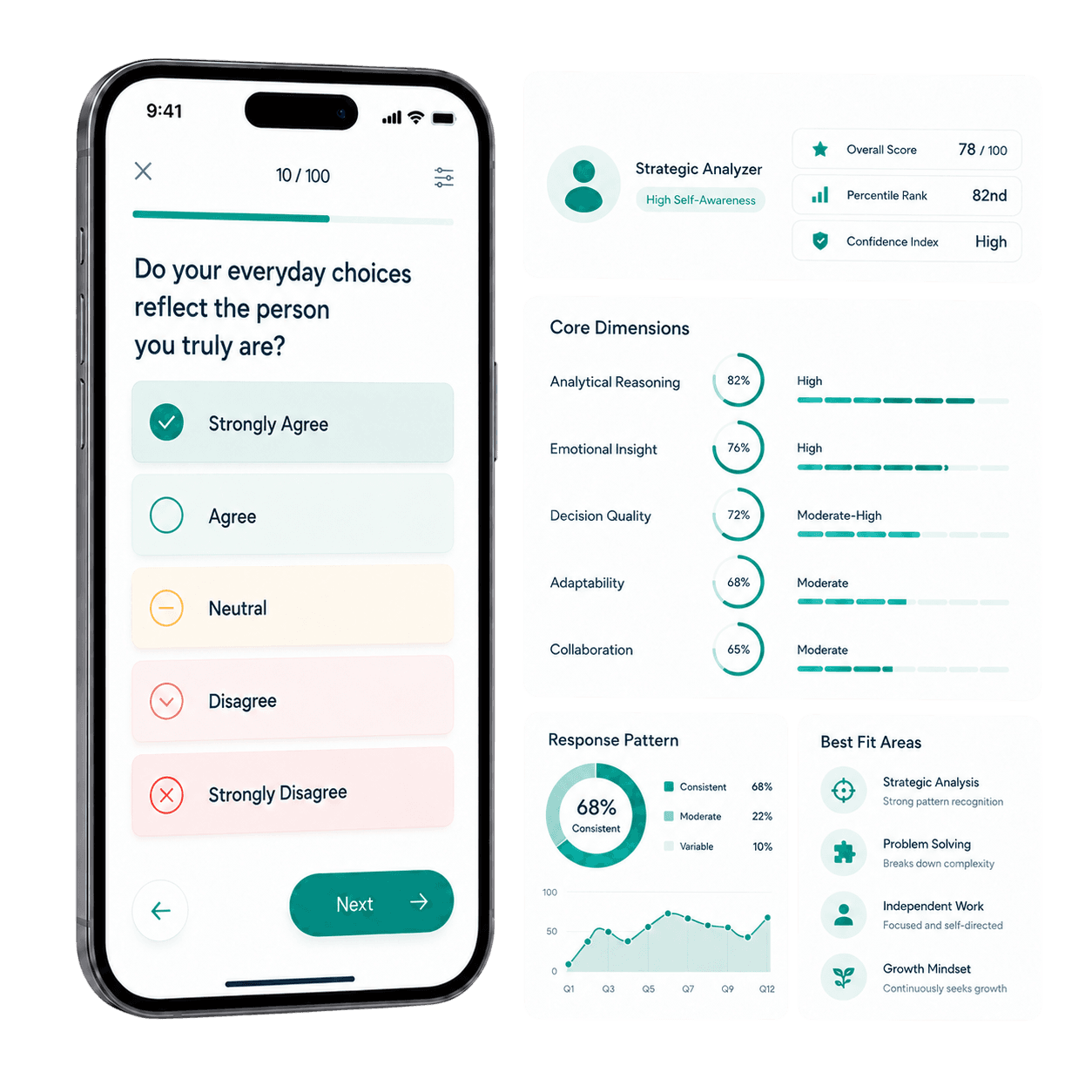
TestCore Motivation and Energy Test and personalised report preview

Separate three problems that can feel like the same thing

“I cannot get myself to do anything” can come from different places. Look at desire, available energy and the mental friction between intention and action.

Do you still want the outcome?

Check whether goals, hobbies, work or relationships still matter to you in theory. A drop in interest or emotional reward can feel like low motivation even when energy is not the only issue.

  • Interest and reward
  • Goals and purpose
  • Emotional engagement

Do you have enough energy to act?

Fatigue, poor sleep and slow recovery can make simple tasks feel physically or mentally expensive. Compare current energy with what is normal for you rather than with what you think you should be able to do.

  • Energy and fatigue
  • Sleep and restoration
  • Small-task effort

Where does intention break down?

Notice whether concentration, indecision, overwhelm or difficulty starting creates a gap between wanting to act and actually beginning or sustaining the task.

  • Task initiation
  • Focus and decisions
  • Follow-through in daily life

How it works

1

Choose a few real tasks as reference points

Think about getting out of bed, replying to a message, starting work, cooking, exercising or doing something you usually enjoy. Concrete examples make changes in motivation and energy easier to judge.

2

Compare drive, capacity and reward

As you answer, notice whether the problem is wanting less, having less energy, struggling to focus and start, or several of those changes appearing together.

3

Use the result to decide what deserves investigation

The overall pattern can help you see whether low motivation and energy are isolated frustrations or part of a broader change in mood, sleep, interest, self-view and everyday functioning.

Frequently asked questions

Q

What is the difference between low motivation and low energy?

Low motivation is reduced drive or incentive to act. Low energy is reduced mental or physical capacity. They often overlap, but you can want to do something and feel too depleted to start, or have energy while the task no longer feels rewarding.

Q

Why does task initiation matter in a motivation test?

The gap between intention and action is practical evidence. If you still care about the outcome but repeatedly cannot begin, concentration, fatigue, overwhelm, sleep or other factors may be contributing to the problem.

Q

Can poor sleep make motivation feel lower?

Yes. Poor sleep can affect energy, concentration, emotional regulation and the effort required to begin tasks. It is one reason motivation and energy are more useful when considered together rather than as a character judgment.

Q

Does low motivation always mean depression?

No. Stress, burnout, physical illness, medication, substance use, grief, anxiety, sleep disruption and many other factors can affect drive and energy. An online assessment cannot determine the cause by itself.

Q

When should low motivation or fatigue deserve more support?

Consider qualified support when the change persists, worsens or begins to interfere with self-care, work, study, relationships or safety. Immediate safety concerns require urgent local help.

Calling yourself lazy collapses several different problems into one unfair explanation.

The more useful question is whether desire, energy, concentration, reward or recovery changed first — and how much that change is affecting everyday life.

Compare what you still care about with what you can actually start
Separate fatigue and poor recovery from lack of intention
Notice whether low reward or reduced interest is making effort feel pointless
Use daily examples to decide whether the change is temporary or deserves a fuller look
Check motivation and energy
Takes around 10 minutesPrivate and secure