
Testcore

A thought can appear without saying anything about what you want or who you are.

Intrusive thoughts can feel powerful because they are unwanted, upsetting or inconsistent with your values. The practical question is what happens next: how much meaning you give the thought, how hard you try to remove it, and how much of your attention it captures.

Fast results
Secure
Private
Trusted by thousands of curious users
Rated 4.8/5by our users
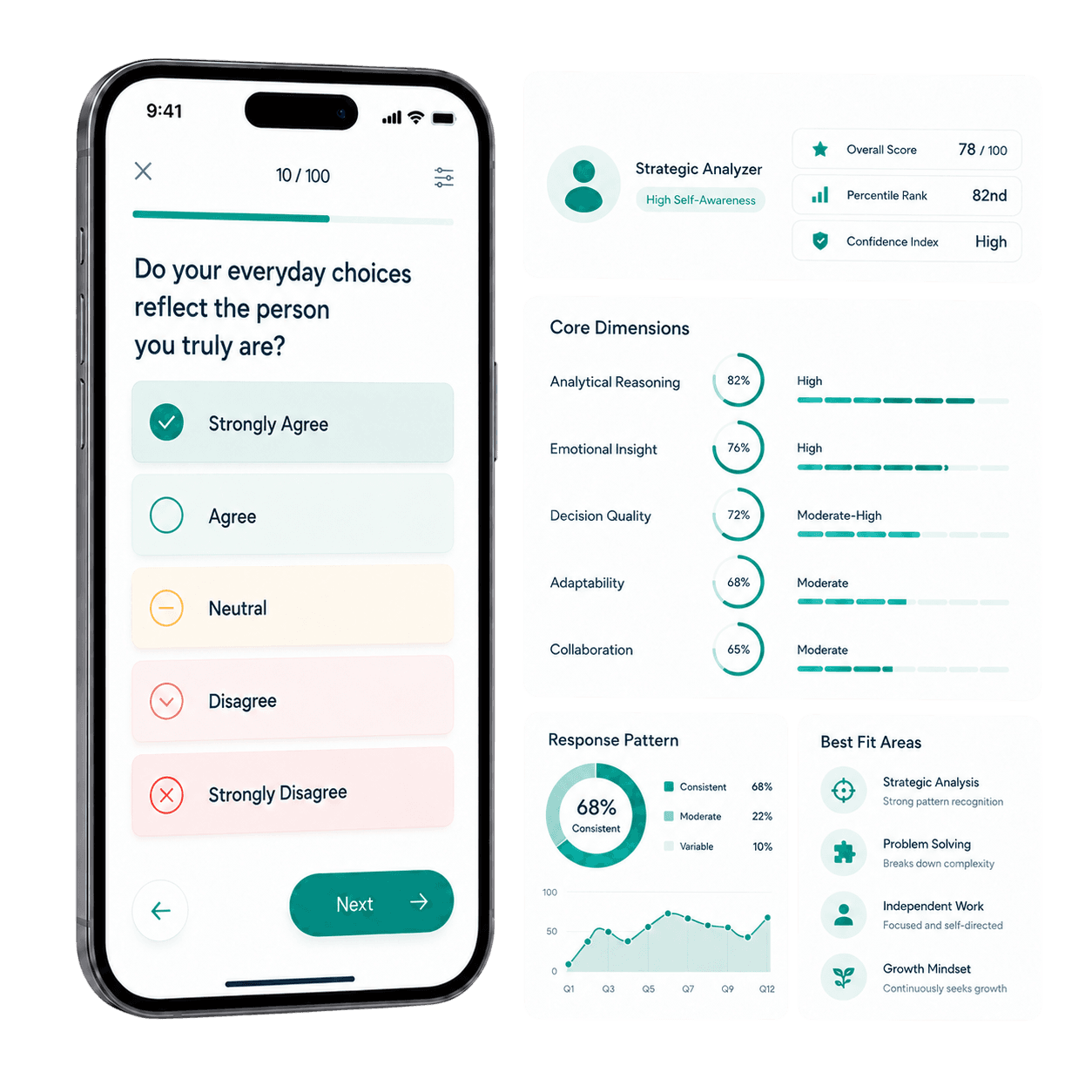
TestCore Intrusive Thoughts Test and personalised report preview

Separate the presence of a thought from the response that keeps it important

This route focuses on intrusive-thought experiences represented inside the broader OCD assessment: recurrence, distress, meaning, suppression, responsibility and attempts to neutralise or escape the thought.

Notice what makes the thought feel significant

Explore whether the thought feels threatening because it repeats, clashes with your values, seems to imply something about you, or feels impossible to dismiss.

  • Recurrence
  • Meaning assigned to the thought
  • Distress and attention

Notice what you do to make it go away

Look at suppression, mental review, reassurance, checking or another response intended to neutralise the thought or prove it is not meaningful.

  • Suppression
  • Neutralising responses
  • Reassurance or checking

See the practical cost of treating the thought as urgent

Consider whether the response consumes time, narrows attention, changes decisions or makes the thought more central to your day than you want it to be.

  • Time and focus
  • Avoidance or delay
  • Daily impact

How it works

1

Answer for the unwanted thoughts you actually recognise

Think about thoughts, images, fears or questions that arrive without invitation and are difficult to leave alone, especially when their presence itself feels important.

2

Separate the thought from your interpretation of it

Your answers help distinguish the unwanted mental event from the meaning, responsibility or danger you may attach to having it.

3

Look at the response and its cost

Use the overall result to notice what you do to settle or neutralise the thought and whether that response is taking time, energy or flexibility from daily life.

Frequently asked questions

Q

Does having an intrusive thought mean I want it to happen?

No. An unwanted thought is not the same as an intention, wish or action. Intrusive thoughts can be distressing precisely because they conflict with what a person values.

Q

What does the Intrusive Thoughts Test explore?

It explores themes inside the broader OCD assessment, including unwanted thoughts, recurrence, distress, thought meaning, responsibility, suppression and attempts to neutralise or escape the thought.

Q

Will I receive a separate intrusive-thought score?

No. This route leads to the shared OCD assessment, which returns one overall result range. Intrusive-thought themes help explain that result but are not a separate sub-score.

Q

Are intrusive thoughts always related to OCD?

No. Intrusive thoughts can occur in many contexts and can also occur without a mental-health disorder. This page focuses on their relevance within the broader OCD self-reflection assessment.

Q

Can trying to suppress a thought make it more important to me?

People can find that repeated efforts to monitor, remove or neutralise an unwanted thought keep attention focused on it. The assessment helps you reflect on whether that kind of response appears in your own pattern.

Q

When should I consider professional support?

Consider qualified support if intrusive thoughts are causing significant distress, consuming substantial time or leading to repeated compulsive responses or avoidance. An online result is not a diagnosis.

The thought is one event. The meaning and response can become the larger pattern.

A self-check cannot tell you what a thought says about your character, and it cannot diagnose OCD. It can help you notice when unwanted thoughts are being treated as evidence that must be analysed, neutralised or disproved.

Separate the unwanted thought from intent or identity
Notice the meaning or responsibility attached to having it
Identify the response used to reduce distress
See whether that response is consuming time or reinforcing attention
Explore intrusive-thought patterns
Takes around 10 minutesPrivate and secure