Testcore

Look at your interpersonal style through influence, reciprocity and accountability.

Most interpersonal-style tests sort communication into named styles. This page takes a different route: it examines how you adapt socially, influence people, balance your goals with their needs, and respond when trust or responsibility is at stake as part of a broader psychopathy-traits assessment.

Fast results
Secure
Private
Trusted by thousands of curious users
Rated 4.8/5by our users
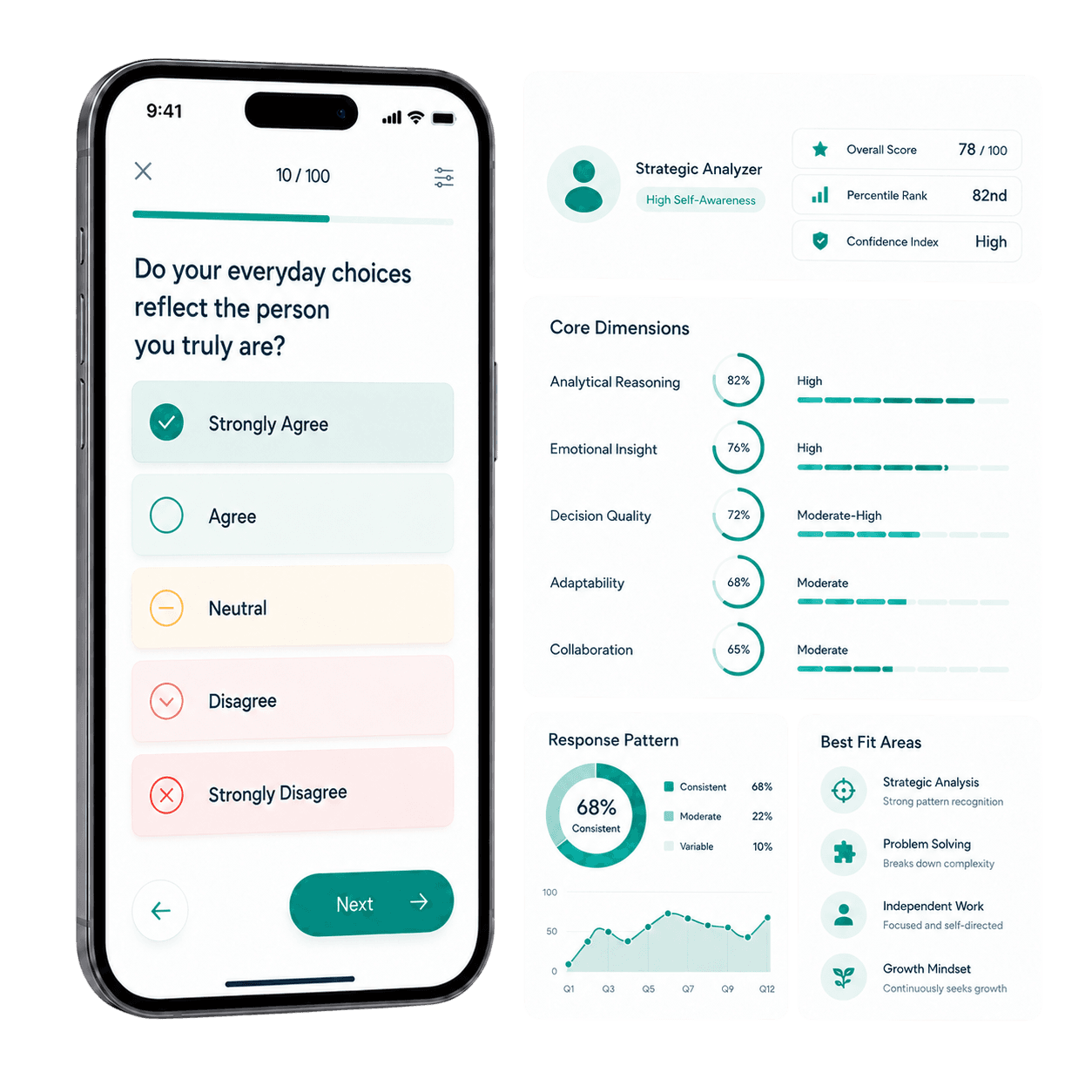
TestCore Interpersonal Style Test and personalised report preview

The important distinction is not whether you are persuasive — it is how persuasion works in the relationship

The assessment includes social confidence and adaptation, but also empathy, honesty, responsibility and self-interest. Looking at those together makes the interpersonal questions more useful than a generic label such as dominant, analytical or expressive.

See what social adaptation is serving

Changing your approach for a different audience can be ordinary skill. Ask whether the goal is mutual understanding, effective cooperation, personal advantage, or simply getting the other person to respond the way you want.

  • How quickly you read and adapt to people
  • What outcome you are trying to secure
  • Whether the interaction remains reciprocal

Compare influence with honesty and empathy

A persuasive interaction looks different when you also consider whether you say what someone wants to hear, how much their feelings affect you, and whether their interests still matter when they conflict with your own.

  • Influence versus instrumental use
  • Honesty when deception would help
  • Concern for the other person's outcome

Follow the interaction into accountability

Interpersonal style is not only what happens during the conversation. Notice what you do after trust is damaged, someone is hurt, or a strategy produces the outcome you wanted at another person's expense.

  • Responsibility after the interaction
  • Guilt or remorse when harm occurs
  • Whether later behaviour changes

How it works

1

Answer from interactions where something is at stake

Think about disagreement, persuasion, competition, closeness and situations where another person's needs interfere with your own goal. Those moments reveal more than casual small talk.

2

Keep the product bridge clear

TestCore does not return a named communication or interpersonal style. These questions contribute to one overall psychopathy-traits result alongside emotional and risk-related tendencies.

3

Use the result to identify a practical relationship cost

Look for repeated effects on trust, honesty, reciprocity, conflict or accountability. That is where the broader trait result becomes actionable in an interpersonal setting.

Frequently asked questions

Q

Will this test tell me my interpersonal communication style?

No. It does not return a named style such as assertive, passive, analytical, expressive or one of the common Social Styles categories. It returns one overall psychopathy-traits result.

Q

Why does a psychopathy-traits assessment include interpersonal behaviour?

Interpersonal features such as influence, deceit, charm, manipulation and social adaptation are commonly discussed in psychopathy research alongside affective and behavioural traits. This assessment includes related self-report questions without claiming a professional psychopathy factor score.

Q

Does being socially skilled mean someone has psychopathic traits?

No. Social confidence, charm and adaptability are not diagnostic by themselves. The broader context includes empathy, honesty, self-interest, accountability and other recurring tendencies.

Q

Do I receive an interpersonal-style score?

No. The assessment has one overall psychopathy-traits result and does not provide a separate interpersonal-style sub-score.

Q

Can I use this page to evaluate another person's manipulation style?

No. The assessment is based on your own answers and is not designed to diagnose or label another person's behaviour.

Q

What if my real goal is to understand communication style at work?

A dedicated communication or Social Styles assessment may fit that question better. This page focuses specifically on interpersonal tendencies represented inside the broader psychopathy-traits assessment.

Interpersonal style is a much broader search than this product can honestly own

Communication-style frameworks usually ask how you express yourself or collaborate. Here, the useful narrower question is how influence, empathy, honesty and accountability combine when your own outcome matters.

No promise of a named communication or Social Styles profile
A clear bridge from interpersonal behaviour to the broader psychopathy-traits result
Context around influence, reciprocity, empathy, honesty and responsibility
A practical way to examine repeated effects on trust rather than merely naming a style
Explore interpersonal behaviour
Takes around 10 minutesPrivate and secure