Testcore

Take an impulsivity and attention test for the moment between noticing and acting.

This is a self-report questionnaire, not a go/no-go or reaction-time task. It looks at whether shifting attention, interruption, urgency or restlessness makes quick responses more likely in the situations that matter to you.

Fast results
Secure
Private
Trusted by thousands of curious users
Rated 4.8/5by our users
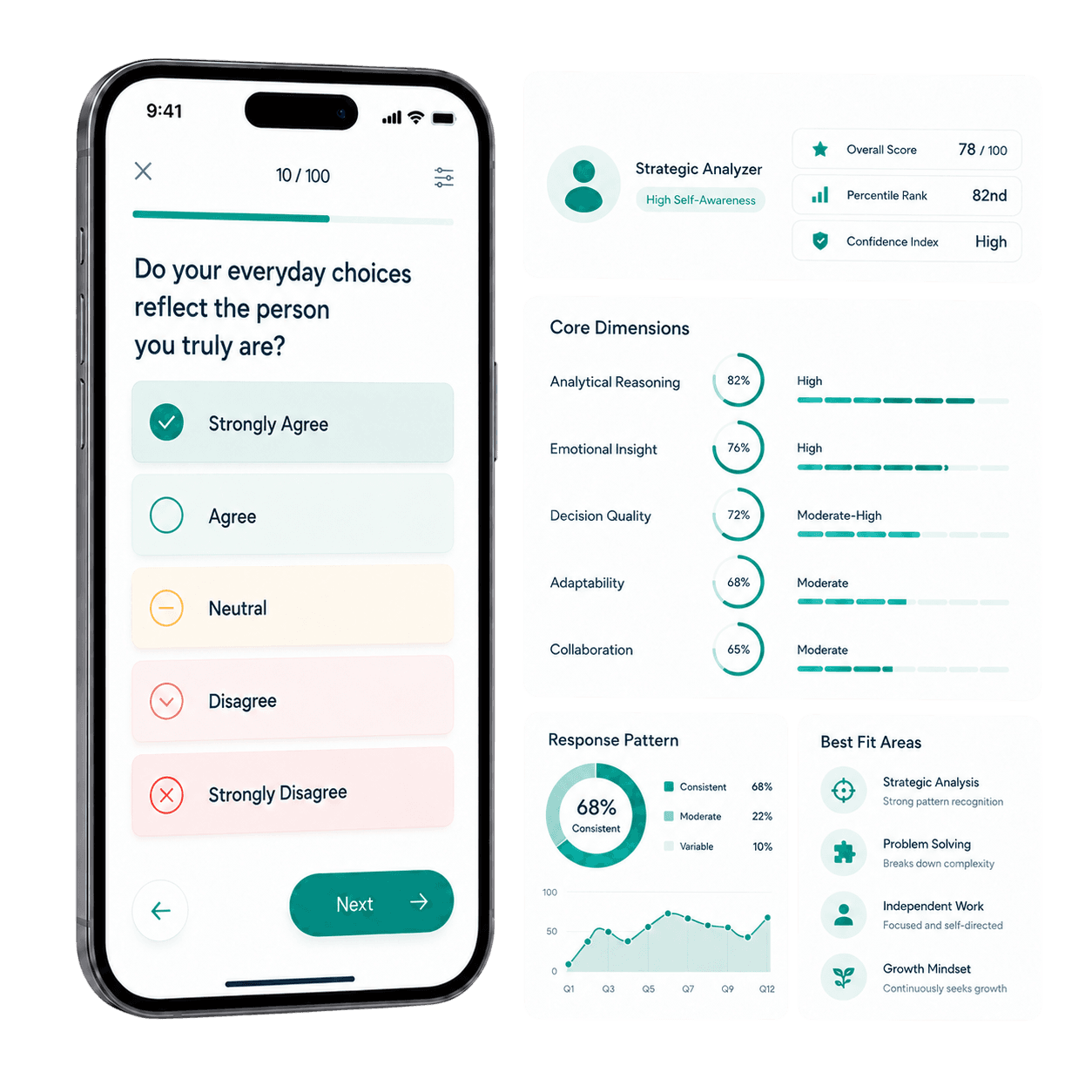
TestCore Impulsivity and Attention Test and personalised report preview

The useful part is what happens just before the quick decision

Not every fast response is a problem. The pattern becomes more useful to examine when the same conditions keep shortening the pause between what you intended to do and what happens next.

Find what narrows the pause

Urgency, interruption, boredom, frustration or a sudden shift in attention can change how much time you give yourself before speaking, switching, spending, agreeing or abandoning a plan.

  • Under urgency
  • After interruption
  • When frustration rises

Separate fast from costly

Quick thinking can be useful. The issue is whether the response repeatedly creates consequences you did not want — missed details, unfinished work, regret, conflict, or another task left behind.

  • What happens immediately
  • What you have to repair later
  • Whether the same cost keeps returning

Create a better intervention point

Once you know the conditions that make the pause disappear, you can test a buffer: fewer interruptions, a delay before acting, written reminders, environmental changes, or professional support where appropriate.

  • Add space before the response
  • Change the condition, not only the intention
  • Track whether the consequence changes

How it works

1

Answer from ordinary quick-reaction moments

Think about conversations, decisions, task switching, waiting, interruptions and the situations where you act faster than you planned to.

2

See the broader ADHD-traits result

Your responses produce one overall level. TestCore does not measure laboratory response inhibition, reaction time, or a separate clinical impulsivity score.

3

Use the report where consequences show up

Compare the result with the moments you most want to change and decide which condition, pause point, or support is worth testing next.

Frequently asked questions

Q

Is this a go/no-go or response-inhibition test?

No. TestCore does not measure reaction time, commission errors or laboratory-style inhibition. This is a self-report questionnaire about attention, impulsive reactions and related everyday patterns.

Q

Will I get a separate impulsivity score?

No. Your answers contribute to one overall ADHD-traits level and a narrative report rather than a standalone impulsivity or attention subscore.

Q

Can someone make quick decisions without having ADHD?

Yes. Impulsive or rushed decisions can occur for many reasons, including stress, mood, sleep, personality, environment or habit. A self-report result cannot determine the cause by itself.

Q

What if I do not feel physically hyperactive?

ADHD-related experiences do not look identical in everyone. Some people report more inattention or internal restlessness than obvious physical hyperactivity. TestCore does not diagnose a clinical presentation.

Q

Can this Impulsivity and Attention Test diagnose ADHD?

No. Diagnosis requires a broader assessment that considers persistence, impact across settings, childhood history and other possible explanations.

Q

What happens after I finish?

Your responses produce one overall ADHD-traits level. TestCore then presents the report offer where you can unlock the detailed interpretation.

A pause is easier to create when you know what keeps removing it

Telling yourself to think first is vague advice. Knowing that urgency, interruption, frustration or a sudden attention shift is the moment your decisions speed up gives you a place to intervene.

Look at the condition before the quick response
Judge the pattern by repeated consequences, not speed alone
Test a buffer where the pause usually disappears
Use professional assessment for persistent, disruptive concerns
Explore attention and impulsivity
Takes around 10 minutesPrivate and secure