Trigger and speed
Notice what makes the response accelerate: frustration, feeling controlled, rejection, competition, a blocked goal, or the chance to gain something quickly.
- Trigger
- Urgency
- Impulse
If you want a dedicated conflict-style or fight-or-flight profile, this is not that tool. This assessment looks more broadly at sociopathic-style traits, including impulsivity, risk, rule and boundary disregard, empathy, responsibility, and what happens when pressure turns into a fast choice.
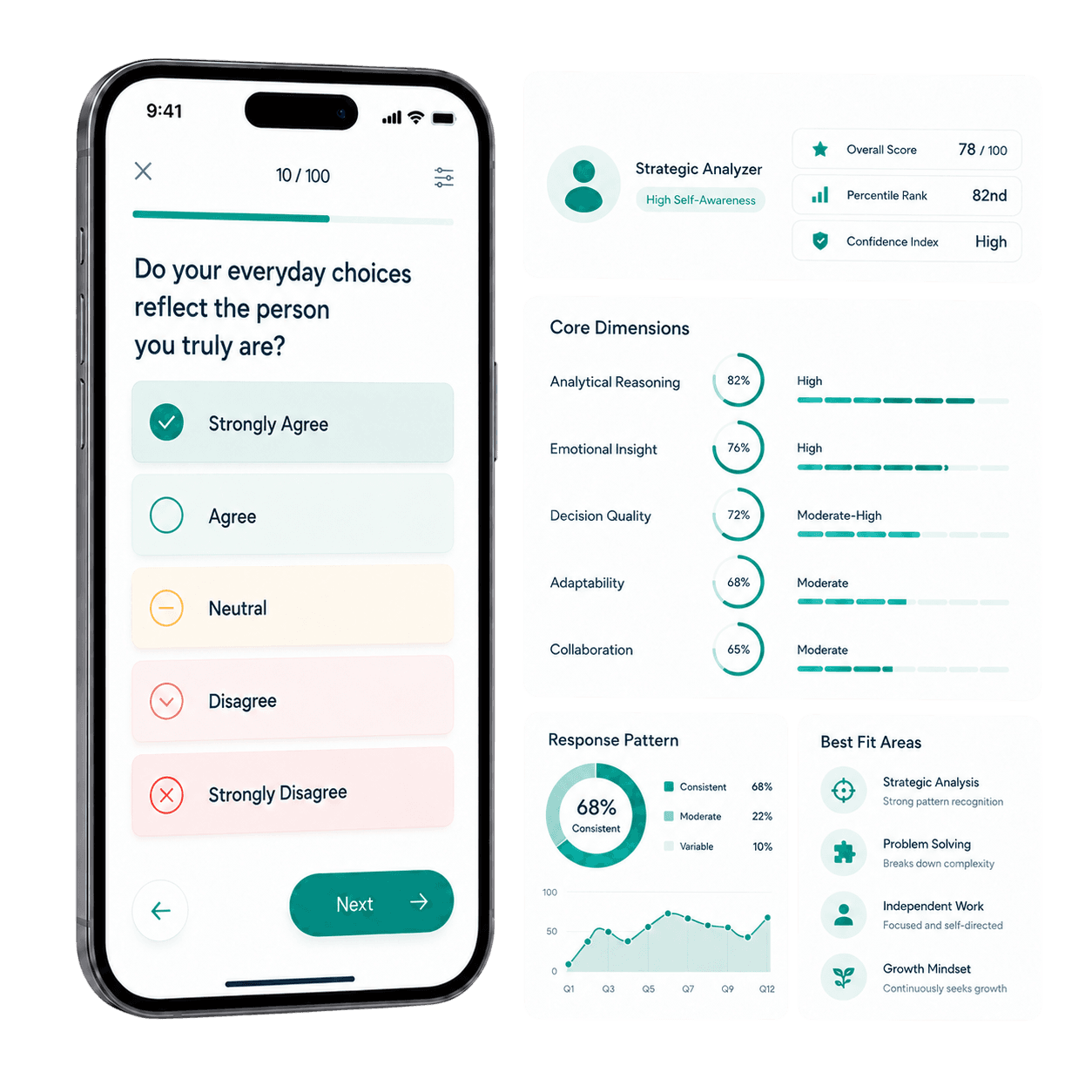
The product returns one overall sociopathic-traits level, not a conflict type or impulse score. Use it to examine the sequence around fast reactions and their consequences.
Notice what makes the response accelerate: frustration, feeling controlled, rejection, competition, a blocked goal, or the chance to gain something quickly.
Look at whether words, risk, rule-breaking, or disregard for another person's limits increase once the situation feels adversarial or high stakes.
The useful question is what follows: regret, repair, blame, justification, indifference, or a changed response the next time the same trigger appears.
Think across arguments, pressure, competition, limits, and risky decisions rather than one unusually intense incident.
Your answers contribute to one Level 1–5 sociopathic-traits result. There is no separate impulse score, conflict score, or named conflict style.
Use the report to identify whether the most practical next step is slowing the first impulse, respecting a boundary, reducing escalation, or taking responsibility for the aftermath.
No. It does not classify you into a conflict style, fight-or-flight response, or anger type. It uses impulse and conflict-related questions as part of a broader sociopathic-traits assessment.
No. You receive one overall Level 1–5 sociopathic-traits result rather than a dedicated impulsivity score.
No. Conflict, anger, or impulsive reactions occur for many reasons. Antisocial personality disorder requires a much broader professional assessment and developmental history.
It focuses on the sequence from trigger to rapid response, escalation, consequences, and whether accountability changes later behavior.
No. The result does not predict violence, dangerousness, or criminal behavior.
Seek qualified support when reactions are causing repeated harm, aggression, threats, unsafe behavior, legal problems, or loss of control. An online self-report is not a substitute for assessment or care.
A broad traits result cannot replace a dedicated conflict assessment, but it can help you see whether impulse, rules, boundaries, empathy, and consequence awareness are interacting in a costly way.