
Testcore

Take a focus and organisation test before you add another planner to the pile.

Knowing what needs to happen is not the same as being able to start, sequence, resume and finish it reliably. This self-report test looks at where your system tends to break down so the next change can target the right step.

Fast results
Secure
Private
Trusted by thousands of curious users
Rated 4.8/5by our users
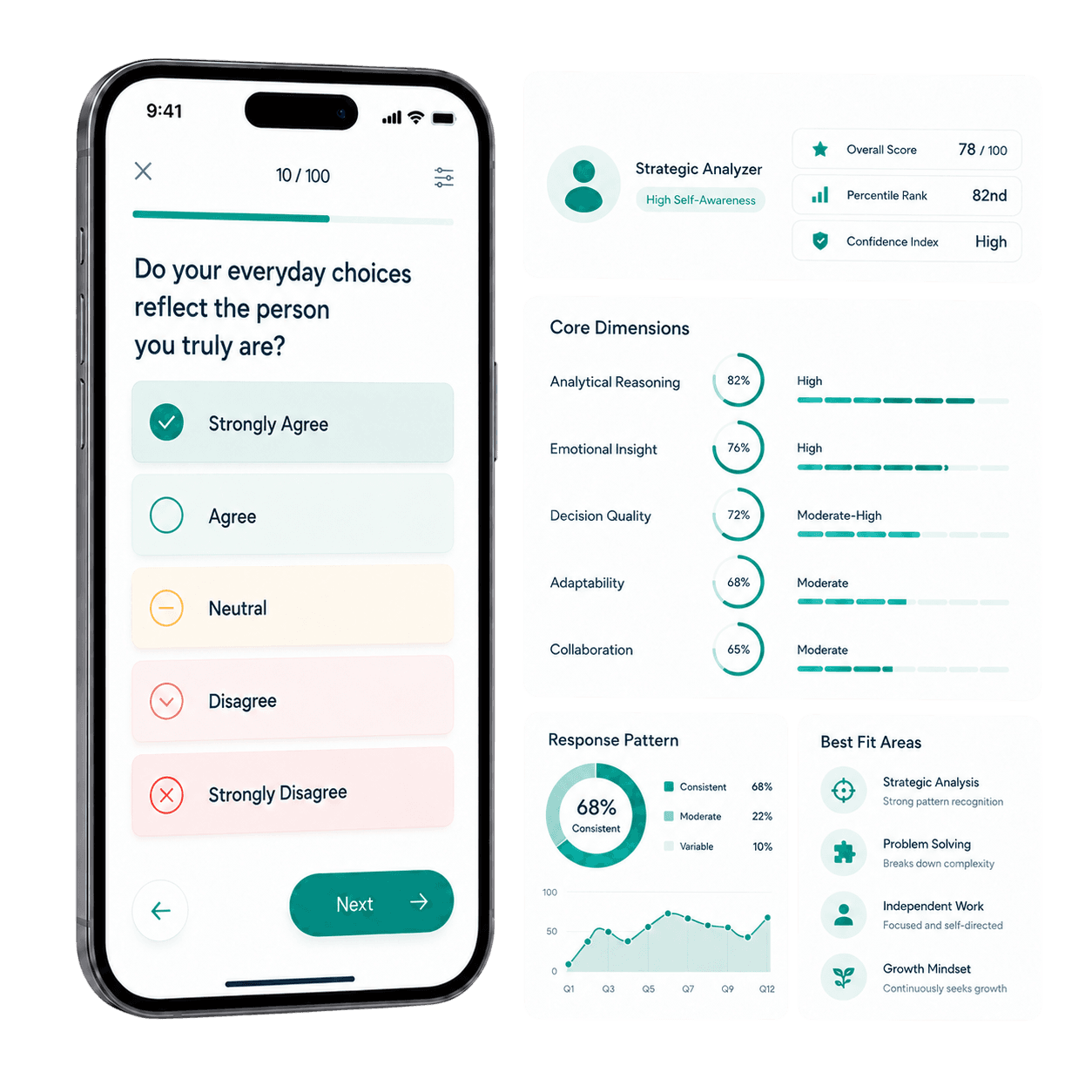
TestCore Focus and Organisation Test and personalised report preview

Productivity advice fails when it targets the wrong step

A planning problem, a starting problem and a follow-through problem can all end with the same unfinished task. The useful part is finding which step keeps failing for you.

Separate planning from starting

You may know exactly what to do and still struggle to begin. Or starting may be easy while priorities blur once several tasks are open. Treating those as the same problem leads to the wrong fix.

  • Knowing versus beginning
  • Prioritising versus reacting
  • Planning versus execution

Check what happens after disruption

A workable system has to survive interruptions, changes of plan and ordinary forgetfulness. If one detour wipes out the rest of the sequence, recovery may be the pressure point that deserves attention.

  • Returning after interruption
  • Rebuilding the next step
  • Keeping priorities visible

Choose systems you can repeat without panic

A method that only works when the deadline becomes urgent is not giving you much control. The report can help you decide whether the next experiment should involve structure, reminders, task size, environment, accountability or professional support.

  • Reduce dependence on last-minute urgency
  • Change the condition that keeps failing
  • Test whether the new system actually holds

How it works

1

Answer from the systems you really use

Think about calendars, reminders, lists, routines, deadlines and the moments when a plan has to survive a distraction or change.

2

See the wider ADHD-traits result

The questionnaire combines your responses into one overall level. It does not produce a separate clinical organisation or executive-function score.

3

Target the step that costs you most

Use the report to decide whether the next practical change belongs at planning, starting, prioritising, returning, or finishing — rather than changing everything at once.

Frequently asked questions

Q

Is this a productivity or time-management test?

It is a self-report ADHD-traits questionnaire viewed through focus and organisation. It looks at the everyday difficulties around planning, time, starting, returning and follow-through rather than rating your productivity system itself.

Q

Will I get a separate organisation score?

No. TestCore produces one overall ADHD-traits level and a narrative report. Organisation-related experiences contribute to the broader result rather than appearing as a standalone clinical score.

Q

Why can a planner work for a few days and then stop helping?

A tool can reduce one source of friction without solving another. For example, a planner may make priorities visible but do little for task initiation, interruptions, time estimation or returning after a detour.

Q

Can stress or poor sleep affect focus and organisation?

Yes. Attention, memory, planning and follow-through can all be affected by stress, sleep problems, anxiety, depression and other factors. An online result cannot determine the cause on its own.

Q

Can this Focus and Organisation Test diagnose ADHD?

No. Diagnosis requires a broader professional assessment, including developmental history, persistence, impact across settings and alternative explanations.

Q

What happens after I finish the test?

Your answers produce one overall ADHD-traits level. TestCore then presents the report offer where you can unlock the detailed interpretation.

A system that only works in crisis is not a stable system

Last-minute pressure can make a task finally move, but it also hides where the process failed earlier. The useful question is which part needs support before urgency becomes the only engine available.

Find whether the breakdown happens before starting or after starting
Treat interruption recovery as part of organisation, not an afterthought
Change one part of the system and watch whether the pattern improves
Use professional assessment when the difficulty is persistent and disruptive
Understand your organisation pattern
Takes around 10 minutesPrivate and secure