
Testcore

Understand what fear of rejection makes you do before rejection has even happened.

A delayed reply, changed tone, criticism, or uncertain plan can feel like proof that connection is at risk. The important pattern is what you begin to feel, assume, ask for, avoid, or do once that fear is active.

Fast results
Secure
Private
Trusted by thousands of curious users
Rated 4.8/5by our users
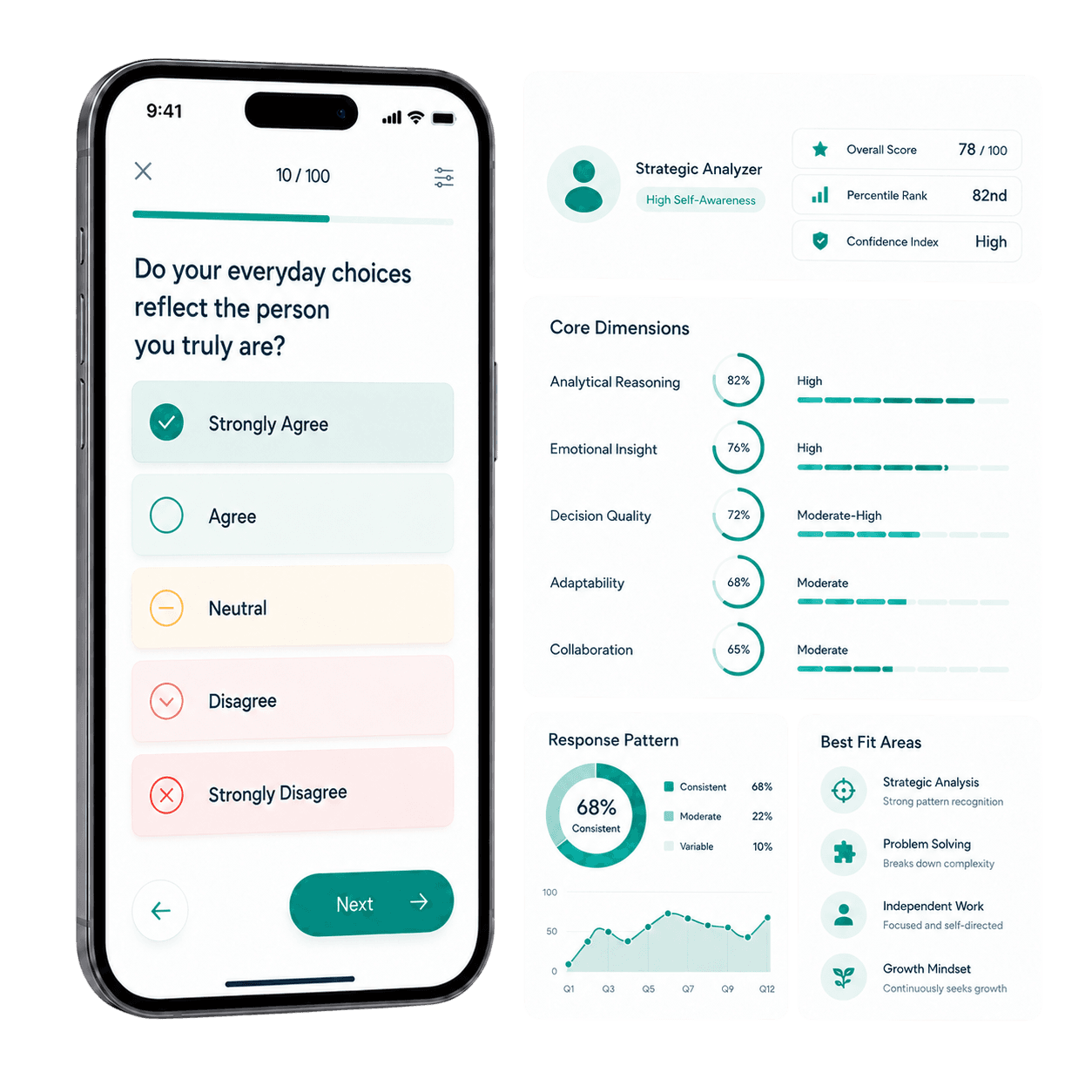
TestCore Fear of Rejection Test and personalised report preview

Rejection sensitivity becomes clearer when you track the protection around it

This page focuses on perceived rejection and abandonment inside the wider BPD-traits assessment: what triggers the fear, how it changes interpretation, and which protective reactions follow.

Notice what your mind treats as evidence

Silence, distance, criticism, delayed replies, changed plans, or a partner needing space can carry very different meanings. Look at which cues reliably feel threatening to you.

  • Common cues
  • Assumptions that arrive quickly
  • Changes in emotional safety

See the protection strategy that follows

Fear can lead to reassurance-seeking, testing, clinging, withdrawal, anger, ending things first, or tolerating too much to avoid loss. The pattern matters more than any one reaction.

  • What you ask for
  • What you avoid
  • What creates more distance

Separate rejection sensitivity from a BPD diagnosis

Fear of rejection can appear in many contexts. The broader assessment also looks at emotion, identity, impulsivity, relationships, and stress responses before producing one overall traits result.

  • A wider context
  • No single-trait diagnosis
  • Clearer next questions

How it works

1

Answer from repeated relationship situations

Think across partners, friends, family, work relationships, criticism, conflict, and periods of uncertainty rather than one recent interaction.

2

Receive one overall BPD-traits level

Your answers create one result from Minimal Traits to Strong Traits. Fear of rejection is not reported as a separate diagnostic subscore.

3

Use the report to compare fear, behavior, and impact

Look at how rejection sensitivity interacts with emotional regulation, identity, impulsive reactions, communication, and relationship stability.

Frequently asked questions

Q

What does the Fear of Rejection Test explore?

It explores sensitivity to perceived rejection, abandonment, criticism, or distance and how those experiences may interact with emotion, behavior, and relationships inside the wider BPD-traits assessment.

Q

Does fear of rejection mean I have BPD?

No. Rejection sensitivity can occur for many reasons, including attachment experiences, anxiety, trauma, low self-esteem, relationship stress, and other mental health conditions.

Q

Will I receive a rejection-sensitivity score?

No. TestCore produces one overall BPD-traits level. Rejection sensitivity is discussed as part of the report rather than scored separately.

Q

Why does the test include impulsive behavior and anger?

The way someone protects themselves from perceived rejection can affect behavior and communication. Looking at the wider sequence gives more context than measuring fear alone.

Q

Can this test diagnose borderline personality disorder?

No. Only a qualified mental health professional can diagnose BPD after assessing the broader pattern, history, impact, and alternative explanations.

Fear of rejection is most useful to understand as a sequence.

The cue, the meaning you assign to it, the emotional surge, the protective response, and the aftermath can reveal more than the word ‘rejection’ alone.

Context for perceived rejection and abandonment
The protective behaviors that follow
One overall BPD-traits result rather than a rejection subscore
A private report for further reflection
Explore rejection sensitivity
Takes around 10 minutesPrivate and secure