Testcore

Look at energy and mood together before one hides the meaning of the other.

A mood change becomes more informative when you know what happened to sleep, activity, motivation and pace at the same time. This route focuses on that connection rather than mood alone.

Fast results
Secure
Private
Trusted by thousands of curious users
Rated 4.8/5by our users
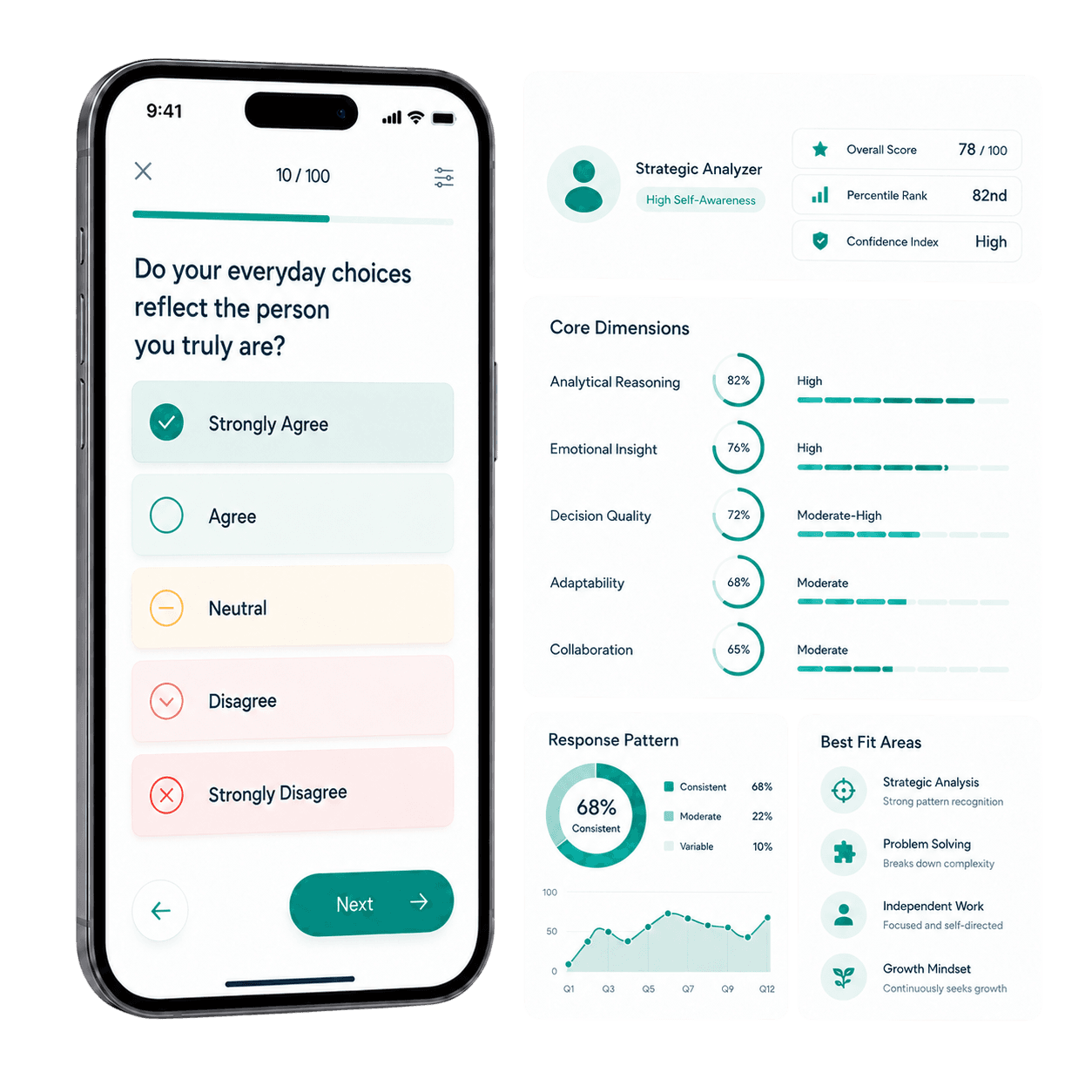
TestCore Energy and Mood Test and personalised report preview

Energy can change the meaning of a mood shift

Feeling better, worse, more irritable or more confident is only one part of the picture. The stronger signal can be what happens to sleep need, activity, drive, mental speed and the number of things you take on.

Compare mood with sleep and drive

Notice whether brighter or more irritable periods come with less need for sleep, more activity, faster thoughts or stronger motivation—and whether lower periods change those same systems in the opposite direction.

  • Need for sleep
  • Activity and mental pace
  • Motivation and follow-through

Check what high or low energy changes

Look at the commitments, decisions and routines that become easier to start, harder to stop or more difficult to maintain when your energy moves away from baseline.

  • New plans and overcommitment
  • Withdrawal and lost momentum
  • Changes in productivity and decisions

Use the result as context, not a label

The assessment returns one overall bipolar-traits level. Use the narrative report to understand the pattern, then seek qualified support if changes are severe or disruptive.

  • One overall result
  • No separate energy or mood score
  • A clearer basis for next steps

How it works

1

Compare different energy states

Think about periods when you felt unusually driven, restless, slowed down or depleted and ask what happened to mood, sleep, decisions and daily responsibilities at the same time.

2

Receive one overall bipolar-traits level

All responses are combined into one Minimal-to-Strong Traits result. There is no separate energy, sleep, mania or depression subscore.

3

Identify the strongest coupling

Use the report to see which changes most often travel together and which parts of life are most affected when energy and mood move away from baseline.

Frequently asked questions

Q

How is this different from a simple mood test?

This route focuses on the relationship between mood and changes in energy, sleep, activity, motivation, mental pace and decisions rather than rating how you feel today.

Q

Why does reduced need for sleep matter?

Sleeping less because of stress, work or insomnia is different from feeling unusually rested or energised despite less sleep. That distinction is part of the broader context clinicians consider when evaluating mood episodes.

Q

Does the test give me an energy score?

No. The product returns one overall bipolar-traits level from Minimal to Strong Traits. Energy, sleep and mood are discussed as themes in the narrative report, not separate scores.

Q

Can stress or other conditions affect energy and mood?

Yes. Sleep disruption, stress, medication, substances, physical illness and other mental health conditions can influence similar experiences. A self-report cannot determine the cause.

Q

Can this test diagnose mania or depression?

No. It cannot diagnose mania, hypomania, depression, bipolar I, bipolar II or another condition. Professional assessment considers the full timeline and clinical context.

Q

When should I consider additional support?

Seek qualified support if changes are severe, recurrent, escalating, disrupting daily functioning, involve risky behaviour or affect your safety. An online result is not a replacement for care.

The pressure point is where energy changes what you do

Mood can be hard to interpret in isolation. The pattern becomes clearer when a change in emotional state also changes sleep, pace, activity, commitments, decisions or the effort required for ordinary tasks.

Compare mood with sleep and activity
Use your own baseline as the reference point
Notice the effect on commitments and judgement
Treat the result as reflection, not diagnosis
Explore Energy and Mood
Takes around 10 minutesPrivate and secure