Notice the onset
Ask whether changes in mood, energy, sleep or activity appear suddenly, build gradually or tend to follow a familiar kind of disruption.
- What seems to shift first
- Whether others notice the change
- How different it feels from baseline
Some changes pass with the situation. Others seem to build, persist and alter your routine before your usual rhythm returns. This route focuses on that cadence rather than one emotional peak.
A useful timeline includes onset, persistence and recovery. This test helps you compare how quickly a change develops, how long it affects your routine and what returning to normal feels like.
Ask whether changes in mood, energy, sleep or activity appear suddenly, build gradually or tend to follow a familiar kind of disruption.
Look beyond the peak and pay attention to whether the altered state continues, changes your functioning and then settles back toward your usual rhythm.
The result cannot measure clinical episode duration. It can help you describe recurring cadence more clearly and decide whether tracking or professional assessment would be useful.
Bring to mind periods where you felt unlike your usual self and consider what changed at the beginning, what persisted and what returning to baseline looked like.
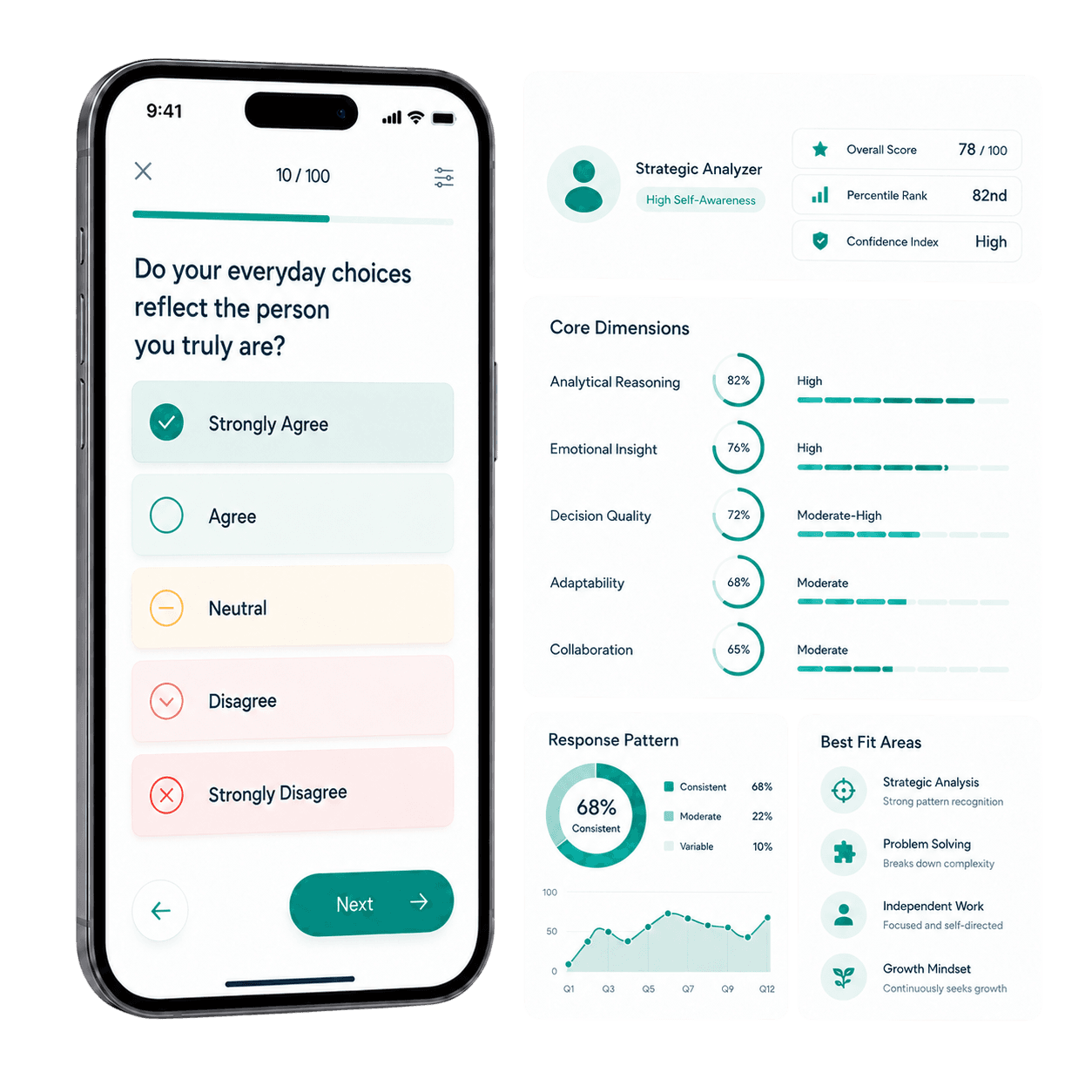
TestCore combines all responses into one Minimal-to-Strong Traits result. It does not calculate clinical episode duration or a separate emotional-rhythm score.
Compare the narrative with your own examples so you can describe whether a shift is brief, sustained, recurrent, disruptive or difficult to recover from.
It refers to the timing and cadence of changes: how mood and energy move away from your usual baseline, how long the shift seems to persist and how you return to your normal rhythm.
No. It does not calculate clinical episode duration or diagnose mania, hypomania or depression. Duration remains part of the broader history a clinician would assess.
Because a distinct period that changes several aspects of functioning can be different from ordinary emotional reactions that track closely with a situation and settle quickly.
You receive one overall bipolar-traits level from Minimal to Strong Traits plus a narrative report. There is no separate rhythm, recovery or episode-length score.
Yes. Stress, sleep disruption, substances, medication, physical illness and other mental health conditions can change mood and energy over time. A self-report cannot identify the cause.
Seek qualified support if changes are severe, recurrent, escalating, disrupting daily functioning, involve risky behaviour or affect your safety. An online result is not a replacement for care.
An emotional reaction and a sustained change in baseline can feel similar in the moment. Looking at onset, persistence, consequences and recovery gives you a more useful timeline without pretending that a self-test can diagnose an episode.