What you stop starting
Notice postponed tasks, unanswered messages, missed plans, neglected hobbies or goals that still matter in theory but no longer create enough pull to begin.
- Task initiation
- Loss of interest
- Reduced follow-through

Plans get cancelled. Messages wait. Small tasks pile up. Sleep changes. Things you normally enjoy feel less rewarding. This depression traits test helps you look at those practical signs together and see whether daily functioning has shifted from your usual baseline.
The clearest clue is often not one emotion. It is the accumulation of small changes that make ordinary life narrower, slower or harder to maintain.
Notice postponed tasks, unanswered messages, missed plans, neglected hobbies or goals that still matter in theory but no longer create enough pull to begin.
Pay attention when getting out of bed, deciding what to do, concentrating, cooking, showering or finishing ordinary responsibilities takes much more effort than it used to.
Withdrawal, emotional flatness, self-criticism, hopelessness or feeling like a burden can change relationships and the way you imagine the future even when you are still functioning on the surface.
Think about the last stretch of everyday life: mornings, messages, work or study, meals, sleep, plans and self-care. Concrete changes are easier to judge than a general question about whether you feel depressed.
The same task can be easy for one person and exhausting for another. Focus on what has changed for you, especially when several areas are moving in the same direction.
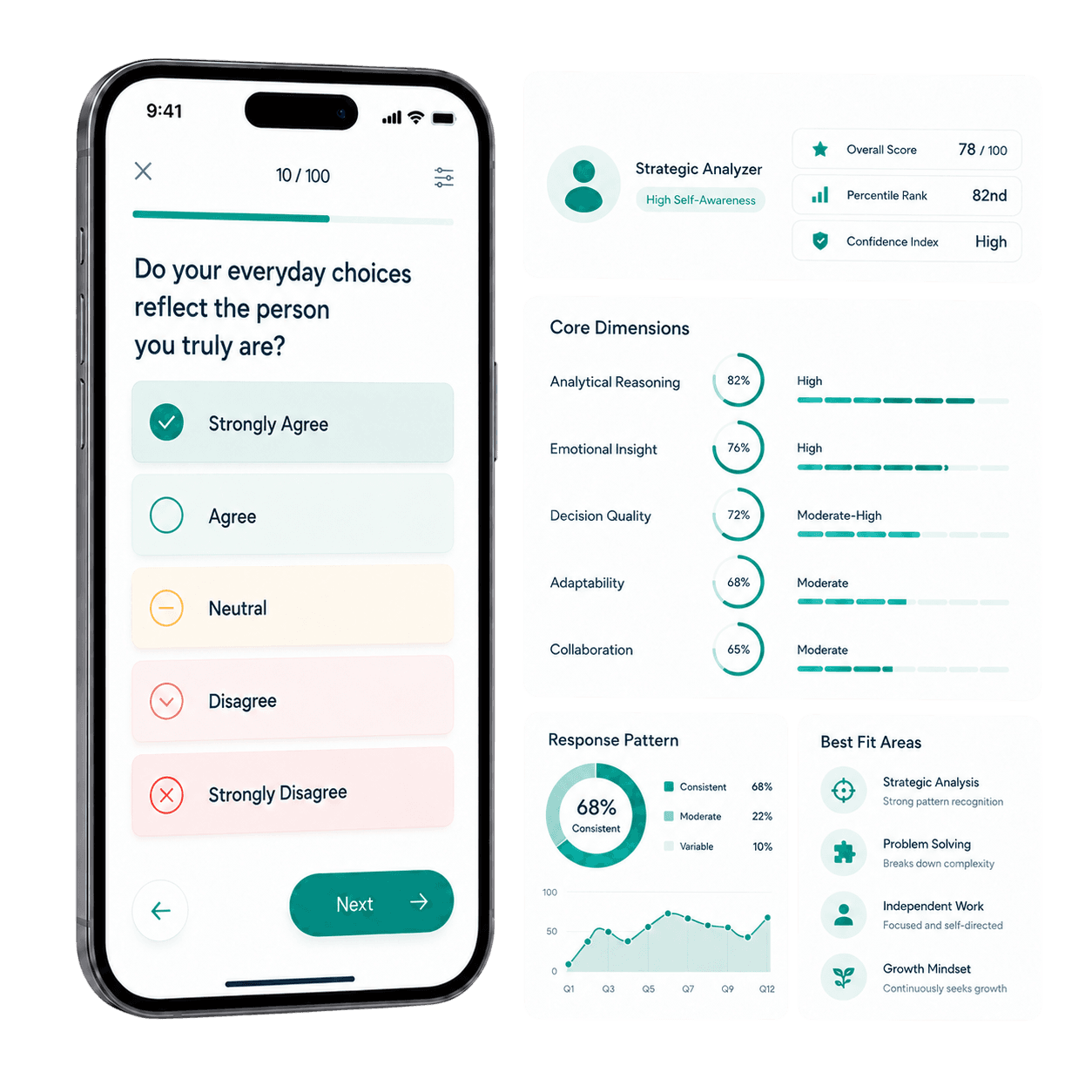
The result brings the wider pattern into one view. Use it to identify which changes are persistent, disruptive or worth discussing with someone who can assess them in fuller context.
They can include recurring changes such as withdrawal, low motivation, reduced enjoyment, fatigue, changed sleep, concentration difficulty, indecision, harsh self-criticism, hopelessness or ordinary tasks taking much more effort.
Yes. Some people notice numbness, irritability, exhaustion, loss of interest, isolation or reduced functioning more clearly than sadness itself.
Routine provides concrete evidence. Changes in work, study, self-care, sleep, social contact and everyday responsibilities can show how broad or disruptive the pattern has become.
No. The term here describes depression-related experiences reflected in recent life, not a permanent personality type. Many can change as circumstances, health, stress and support change.
Consider qualified support when several changes persist, worsen or interfere with daily functioning. Immediate safety concerns or thoughts of self-harm require urgent local help.
A vague label is hard to act on. A missed routine, a cancelled plan, a changed sleep pattern or a task that suddenly feels impossible gives you something concrete to compare over time.