Testcore

See when one more check stops adding information but still feels necessary.

Checking can be useful. The pattern changes when you already know something is probably fine yet still feel unable to move on without another look, another review or another reassurance that finally feels certain enough.

Fast results
Secure
Private
Trusted by thousands of curious users
Rated 4.8/5by our users
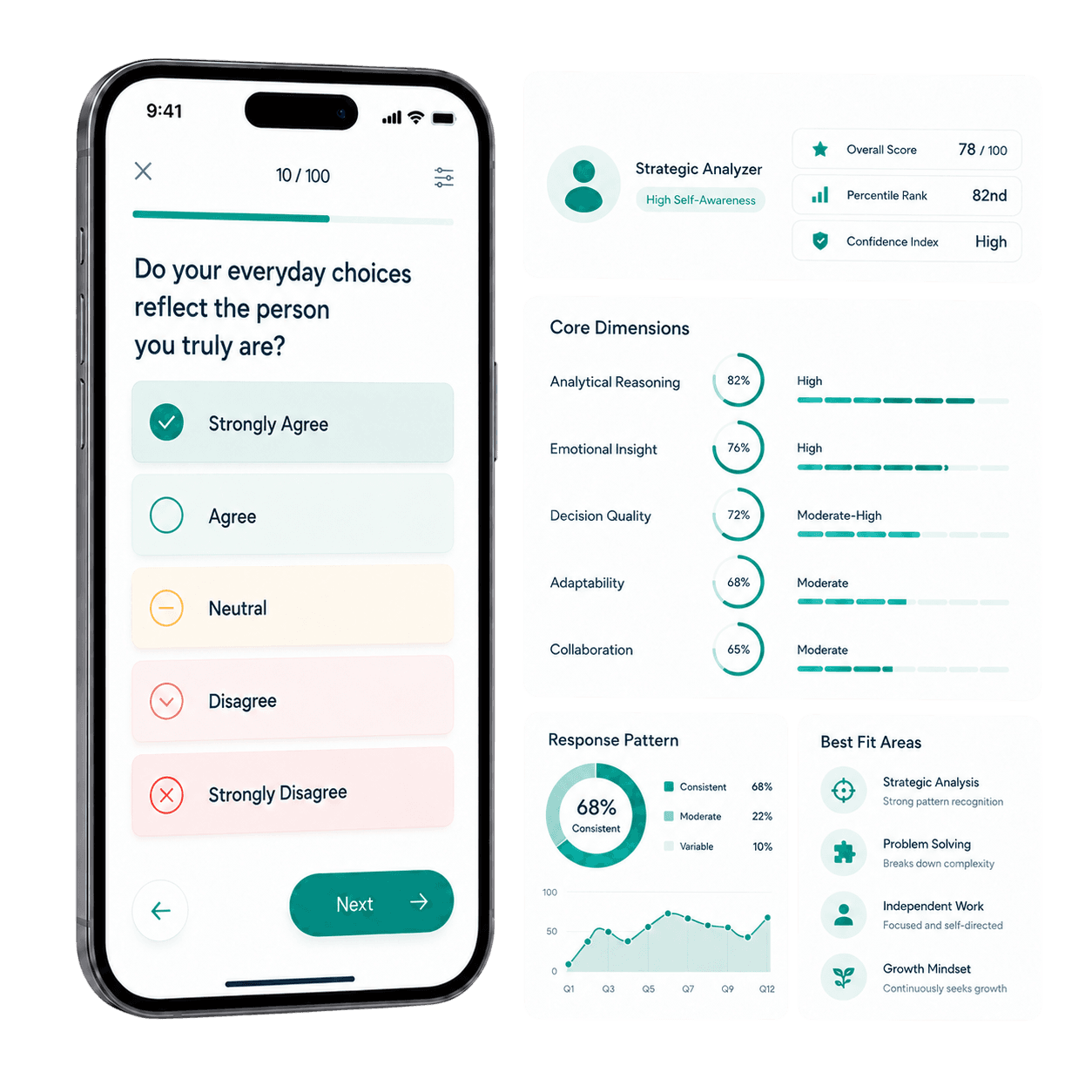
TestCore Checking and Certainty Test and personalised report preview

The practical issue is not carefulness. It is when certainty becomes the price of moving on.

This route focuses on checking and reassurance patterns represented inside the broader OCD assessment: repeated verification, doubt after checking, unresolved responsibility and the need to feel fully certain before stopping.

Find the doubt that asks for another check

Notice the situations where knowing something is probably complete does not create the feeling of completion you need to leave it alone.

  • Doubt after completion
  • Responsibility or fear of error
  • Need for certainty

Trace what the check changes

Ask whether checking, reviewing or seeking reassurance provides new information or mainly reduces discomfort for a short time.

  • What you verify
  • How much relief follows
  • How long the certainty lasts

See what repeated certainty-seeking costs

Look at extra time, delayed decisions, reduced confidence in your first judgement and the amount of attention consumed by questions that keep reopening.

  • Time lost to rechecking
  • Decision delay
  • Confidence and mental energy

How it works

1

Answer from the checks that genuinely repeat

Think about moments when you return to a task, decision, lock, message or memory even after you already have reasonable evidence that it is fine.

2

Separate information-seeking from relief-seeking

Your answers can help you notice whether another check changes what you know or mainly changes how certain you feel for a moment.

3

Identify where the need for certainty is running the decision

Use the overall result to find situations where checking or reassurance is costing more time and confidence than the original uncertainty deserved.

Frequently asked questions

Q

What does the Checking and Certainty Test explore?

It focuses on checking, repeated verification, reassurance-seeking, unresolved doubt and the difficulty of moving on when reasonable evidence does not feel certain enough.

Q

Is checking something twice automatically an OCD sign?

No. Checking is common and often sensible. The more relevant questions are how often it repeats, how difficult it is to stop, what drives it and how much time or distress it creates.

Q

Will I receive a separate checking score?

No. This route leads to the shared OCD assessment, which returns one overall result range. Checking and certainty themes help explain that range but are not separate sub-scores.

Q

Why can repeated checking leave me feeling less certain?

Some people find that repeatedly revisiting the same information shifts attention from the original evidence toward the feeling of doubt itself. The assessment helps you reflect on whether more checking is actually resolving uncertainty in your own experience.

Q

Does reassurance-seeking count as checking?

It can serve a similar function when repeated questions or confirmation from other people are used to reduce uncertainty. This assessment includes reassurance and repeated review within the broader OCD-related pattern.

Q

When should I consider professional support?

Consider qualified support if checking or reassurance consumes substantial time, causes significant distress or interferes with daily functioning. An online result cannot diagnose OCD.

More checking can become less about evidence and more about achieving a feeling of certainty.

That distinction is useful because absolute certainty is rarely available. The goal of this page is to help you identify where another check is solving a real information gap and where it is mainly answering discomfort that soon returns.

Identify the doubt that reopens after checking
Notice whether another check adds information or only relief
See the cost in time, decisions and confidence
Use the result as reflection, not a diagnostic checking score
Explore the checking cycle
Takes around 10 minutesPrivate and secure