Testcore

Find out whether work is testing your ability or your personality fit .

You can be capable and still spend too much energy fighting the way a role is structured. The Big Five lens helps separate skill from fit: novelty, routine, autonomy, teamwork, social exposure, feedback, uncertainty, and pressure all ask different things from personality.

Fast results
Secure
Private
Trusted by thousands of curious users
Rated 4.8/5by our users
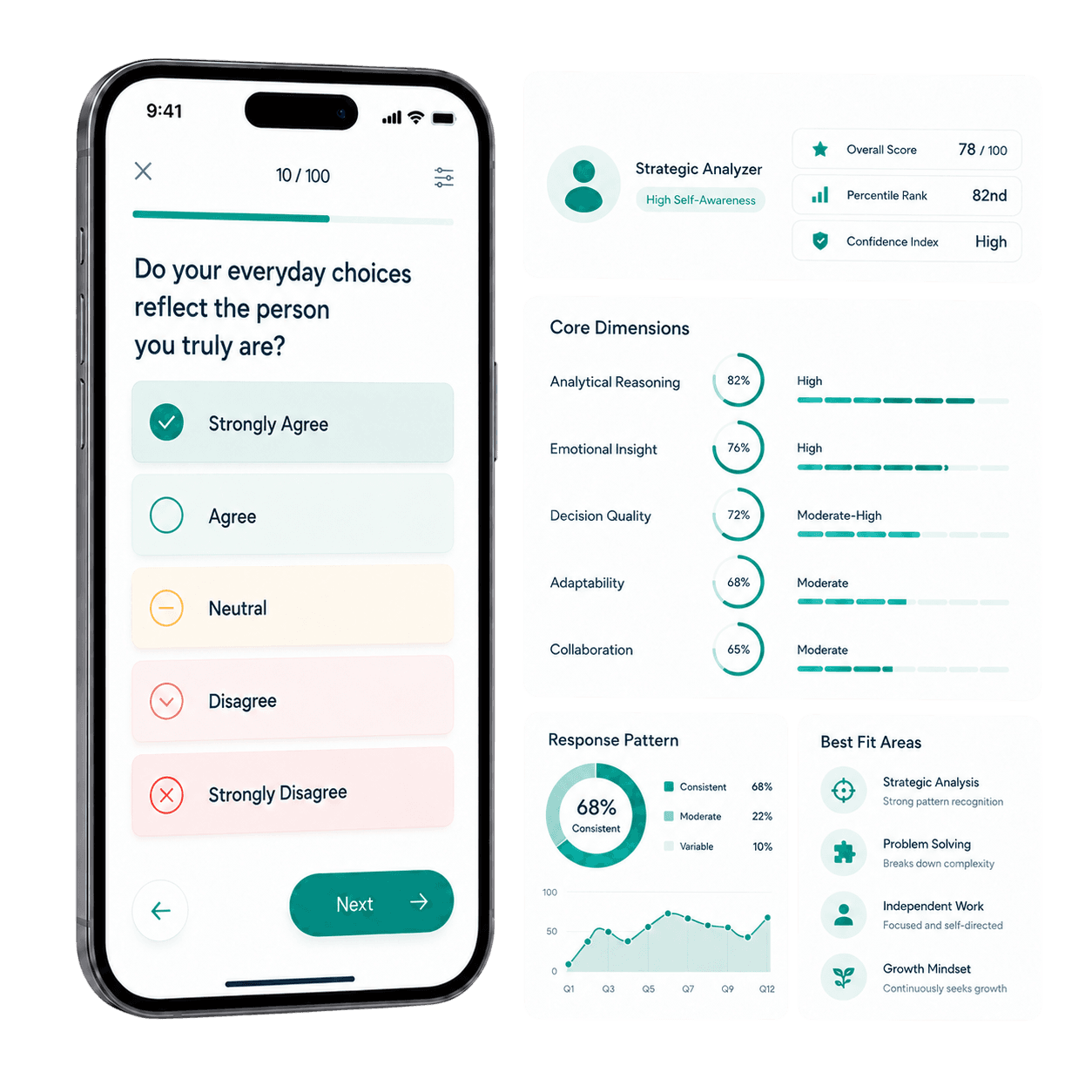
TestCore Big Five at Work Test and personalised report preview

Poor fit can look like low motivation long before it looks like a personality issue

This route uses the same Big Five assessment, then applies the dominant-trait result to work questions: how much structure you need, what kind of stimulation keeps you engaged, how you handle people and feedback, and what pressure does to your usual style.

Separate capability from the cost of the environment

A role can be within your skill set and still demand a style that drains you. The useful question is not only whether you can do the work, but what it costs to keep doing it that way.

  • Skill versus energy cost
  • Fit versus constant self-correction
  • Performance versus sustainability

Map the trait demands of the role

Some jobs reward novelty and ambiguity, others consistency and detail. Some require constant interaction, others long independent focus. The Big Five gives you a language for comparing those demands with your strongest tendency.

  • Structure and autonomy
  • Social load and collaboration
  • Feedback, pace, and uncertainty

Change the setup before changing your whole career

A personality mismatch does not automatically mean you need a new profession. Sometimes the better move is a clearer workflow, different feedback rhythm, more autonomy, fewer interruptions, or a role with a different balance of demands.

  • One environmental adjustment
  • A more precise career question
  • A better conversation about fit

How it works

1

Answer from work and life, not work alone

The assessment measures broad personality tendencies. Use your normal pattern across settings, then apply the result to work after the dominant trait is clear.

2

Identify the strongest Big Five trait

Your responses are scored across the five dimensions, and the leading trait becomes the organising theme of the report.

3

Compare the trait with your actual work demands

Use the career and stress sections of the report to examine where the role fits naturally, where you compensate constantly, and which adjustment may be worth testing first.

Frequently asked questions

Q

Does this test tell me which career I should choose?

No. It can add context about personality fit and work preferences, but career decisions also depend on skills, values, pay, opportunities, responsibilities, health, and the actual role available to you.

Q

Is this a separate work personality assessment?

No. This route uses TestCore's Big Five assessment. The result is a dominant Big Five trait with a detailed report that includes career and work-related interpretation.

Q

Can personality-job fit change over time?

Yes. Roles, responsibilities, experience, skills, and the work environment can change, and people can also change in how their traits are expressed. Fit is not a permanent verdict.

Q

Will I receive a separate work-fit score?

No. TestCore does not return a standalone job-fit score. The work angle comes from applying the dominant Big Five trait and report themes to the demands of your role.

Q

Can a difficult job make my personality look different?

Context can change how traits show up. Stress, workload, role expectations, and team dynamics can amplify or suppress parts of your usual behaviour, which is why the result should be read alongside the environment.

Q

What is a useful next step after the result?

Identify one recurring work demand that clashes with your strongest tendency and test whether a practical adjustment changes the outcome before making a larger conclusion about your ability or career.

Before you call yourself unmotivated, check what the job keeps asking you to override.

Work fit is not about finding a role that never challenges you. It is about understanding which demands cost disproportionate energy and deciding whether that cost is useful growth, avoidable friction, or a sign the environment needs to change.

Separate ability from the energy cost of the role
Compare your dominant trait with the job's real demands
Identify one change in structure, feedback, autonomy, or social load
Use personality as context, not as a career verdict
See your Big Five work pattern
Takes around 10 minutesPrivate and secure