
Testcore

See which Big Five trait keeps entering the relationship before you notice it.

Relationship friction is not always about values or compatibility. Sometimes one person wants more novelty, more structure, more social energy, more harmony, or more reassurance than the other. Big Five language helps make those differences easier to discuss without turning them into blame.

Fast results
Secure
Private
Trusted by thousands of curious users
Rated 4.8/5by our users
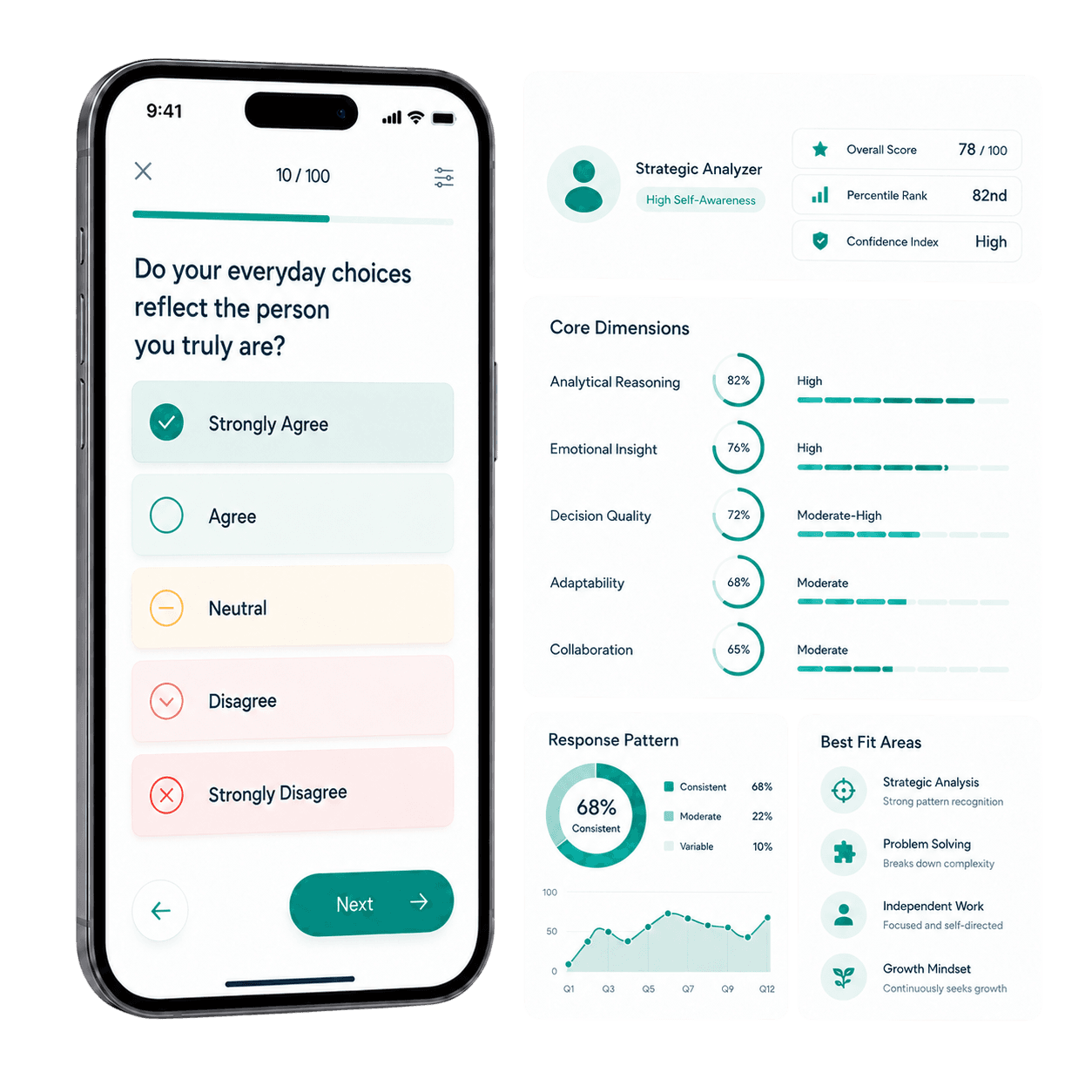
TestCore Big Five and Relationships test and personalised report preview

The trait is not the conflict. The mismatch around it often is.

This route applies the dominant Big Five result to the places where relationships usually get complicated: pace, attention, planning, social energy, cooperation, directness, uncertainty, and emotional reactivity.

Name the preference before it becomes a judgement

One person may experience spontaneity as freedom while another experiences it as chaos. One may experience directness as clarity while another hears unnecessary friction. Personality language can make the preference visible before it becomes a character attack.

  • Preference versus moral judgement
  • Different needs around pace and structure
  • Different thresholds for stimulation and pressure

Find the recurring relationship trade-off

The report helps you examine how your strongest trait may affect closeness, communication, conflict, expectations, and the way you interpret another person's behaviour.

  • What you expect from others
  • How you react when needs differ
  • Where your default style creates friction

Use the insight to make one conversation more precise

A personality result cannot decide whether a relationship works. It can help you replace a vague accusation with a clearer request, boundary, explanation, or recognition of difference.

  • A clearer request
  • A more accurate boundary
  • Less blame around a repeated difference

How it works

1

Answer from your broader personality pattern

This is not a couples test. Answer from your usual behaviour across life, then use the relationship sections of the report to interpret how the dominant trait may show up with other people.

2

Identify the strongest Big Five trait

Your responses are scored across the five dimensions, and the leading trait becomes the organising theme of your result.

3

Apply the trait to one repeated relationship dynamic

Use the report to examine a real difference around communication, closeness, planning, conflict, social energy, or emotional pressure without assuming the trait explains everything.

Frequently asked questions

Q

Is this a compatibility test?

No. TestCore does not return a compatibility score or tell you whether a relationship should continue. This route uses your own Big Five result to help you examine personality differences that may affect relationship dynamics.

Q

Does the test assess my partner?

No. The questionnaire is about your own personality tendencies. It cannot infer another person's traits reliably from your answers.

Q

Which Big Five traits matter in relationships?

All five can matter in different ways because they relate to novelty, organisation, social energy, cooperation, and emotional reactivity. The important question is how a tendency interacts with the specific relationship and context.

Q

Will I receive a separate relationship score?

No. TestCore returns a dominant Big Five trait and a detailed report that includes relationship interpretation. There is no standalone relationship or compatibility score.

Q

Can personality explain all relationship conflict?

No. Conflict can involve values, behaviour, circumstances, communication, trust, safety, expectations, and many other factors. Personality is one useful lens, not a complete explanation.

Q

How should I use the result with another person?

Use it to describe your own preferences and reactions more precisely. Avoid using a personality label as proof that the other person is wrong or that a conflict is inevitable.

A personality difference becomes a problem faster when nobody names the need underneath it.

The Big Five cannot tell you whether two people belong together. It can help you notice when a repeated conflict is partly about different default settings and make the next conversation less personal and more specific.

Identify your strongest Big Five tendency
Separate a personality preference from a character judgement
Use the report to clarify one recurring relationship difference
Turn the insight into a request, boundary, or more accurate conversation
Explore Big Five and relationships
Takes around 10 minutesPrivate and secure