
Testcore

Trace the attachment pattern from trigger to protection to aftermath.

The people and circumstances may change while the sequence stays familiar: connection feels uncertain, an automatic response appears, and the relationship shifts around it. TestCore helps you see the sequence before it looks like five unrelated problems.

Fast results
Secure
Private
Trusted by thousands of curious users
Rated 4.8/5by our users
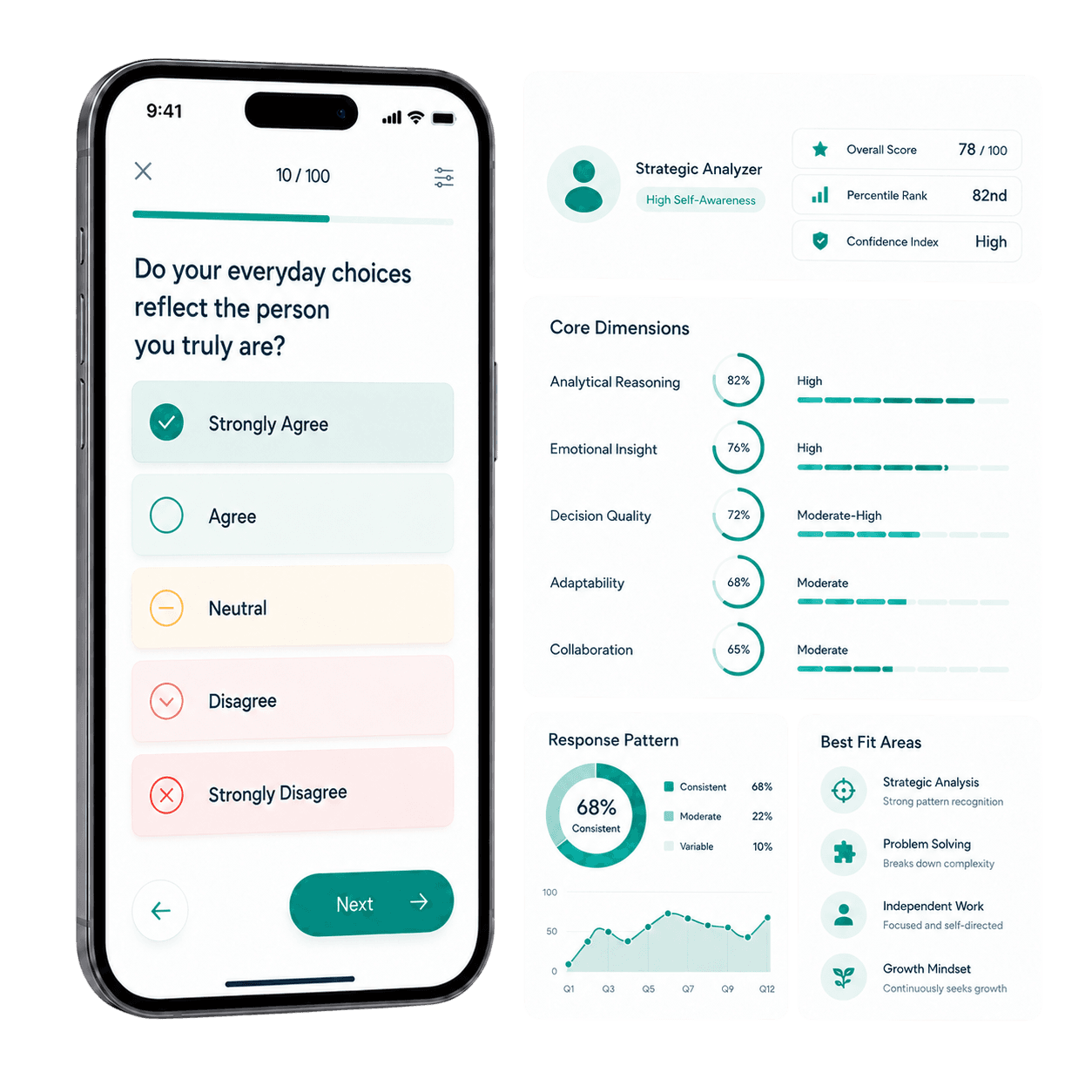
TestCore Attachment Patterns Test and personalised report preview

A repeated sequence is easier to work with than a vague relationship problem

This page focuses on what keeps happening around uncertainty, reassurance, dependence, withdrawal, boundaries and repair — and what changes the outcome.

Find what sets the pattern in motion

A slower reply, a request for space, unexpected closeness, criticism or the need to depend on someone can become a pressure point. Notice which situations repeatedly change your sense of safety.

  • The trigger
  • The meaning you give it
  • The first shift in your behaviour

See the protective response that follows

You may move closer, seek certainty, withdraw, minimise the need, rely on yourself or become conflicted between closeness and distance. The recurring move is the useful evidence.

  • Pursuit or reassurance
  • Distance or self-reliance
  • Mixed approach-and-avoid reactions

Track what happens after the response

The aftermath shows whether the strategy restores safety, creates more distance, prolongs conflict or makes the same concern return. That is where a pattern becomes actionable.

  • What settles the situation
  • What keeps it going
  • Where a different response could begin

How it works

1

Answer from repeated situations

Use several close relationships or enough history in one relationship to separate a recurring pattern from one unusually difficult event.

2

Get the leading attachment profile

Your answers are compared across five profiles. TestCore returns the strongest overall attachment pattern rather than a separate trigger, conflict or reassurance score.

3

Read the profile against the sequence

Use the report to compare what tends to activate the pattern, how you protect yourself and what follows in real relationships.

Frequently asked questions

Q

What is an attachment pattern?

It is a recurring way of responding when closeness, trust, dependence or relationship security feels important. The useful pattern often includes a trigger, a protective response and an aftermath rather than one isolated behaviour.

Q

Will I get a separate attachment-pattern score?

No. TestCore returns one leading attachment profile and a narrative report. This page uses the pattern sequence to help you interpret that broader result.

Q

What if I react differently with different people?

Keep those differences in view. Trust, consistency, stress and relationship history can change how strongly an attachment response appears. A pattern can be recurring without looking identical everywhere.

Q

Can attachment patterns change?

Yes. Experience, safer relationships, deliberate communication, self-awareness and therapy can all influence how people respond to closeness and uncertainty.

Q

Is this test a diagnosis?

No. It is an educational self-report assessment and does not diagnose a mental health condition or explain the cause of a relationship difficulty by itself.

Q

How can I use the result?

Use it to recognise the sequence earlier: what happened, what you assumed it meant, what you did next and what effect that response had. That creates a clearer place to test a different conversation, boundary or coping response.

The pattern is not the feeling. It is what reliably happens around the feeling.

Fear, relief, irritation or the need for space can occur in many relationships. The stronger clue is the repeated sequence linking the situation, your interpretation, your protective move and the result that follows.

Compare more than one emotionally important situation
Separate the event from the meaning you give it
Watch whether the same protective move keeps returning
Use the report to find the earliest point where the sequence could change
Trace your attachment pattern
Takes around 10 minutesPrivate and secure