
Testcore

Take an ADHD traits test before turning familiar descriptions into a conclusion.

It is easy to recognise yourself in a list of ADHD traits. The harder question is whether those experiences keep returning, show up in more than one setting, and create enough friction to matter. This test helps you examine that pattern.

Fast results
Secure
Private
Trusted by thousands of curious users
Rated 4.8/5by our users
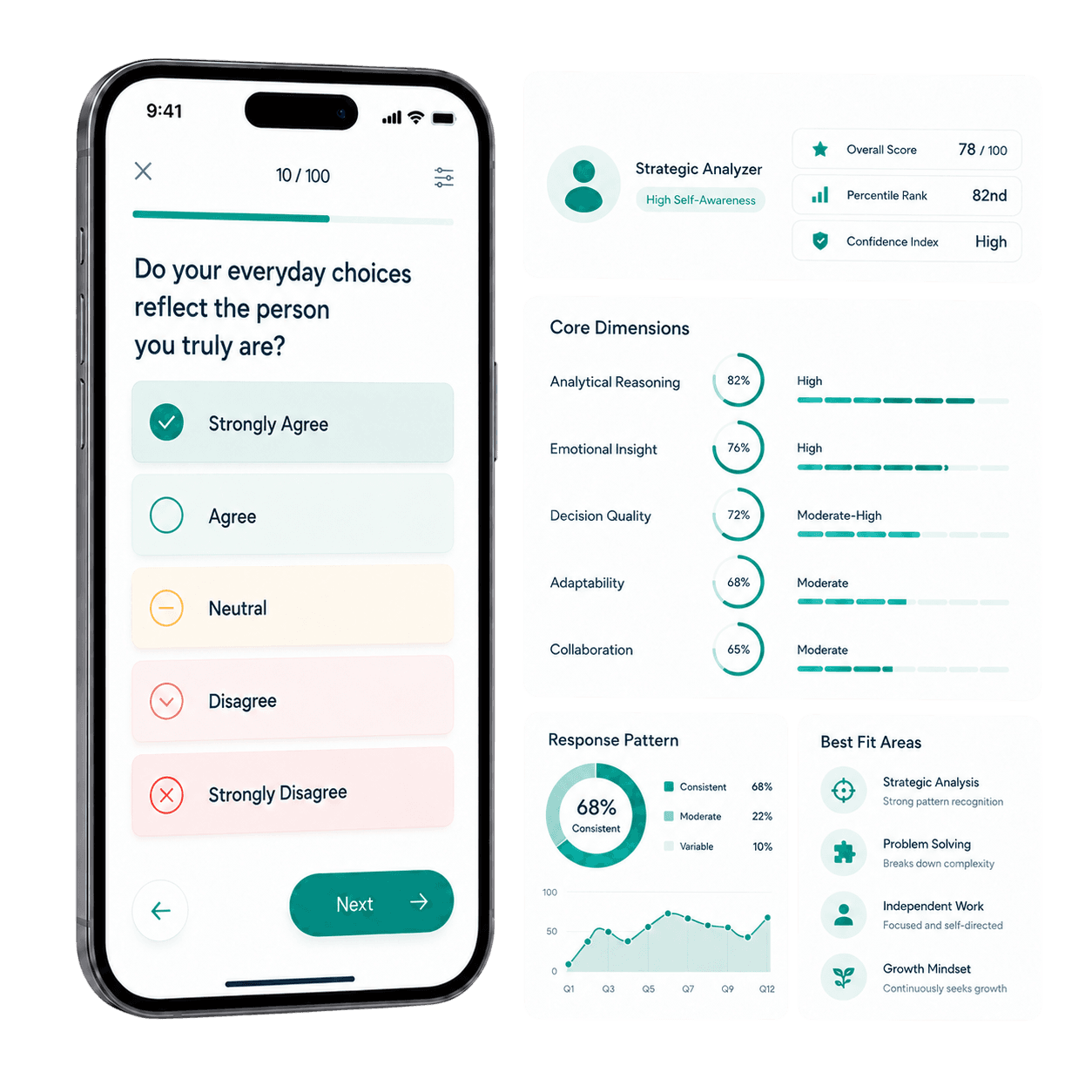
TestCore ADHD Traits Test and personalised report preview

Recognition is useful. Repetition and impact tell you more.

Many ADHD-related experiences are common occasionally. The useful distinction is whether they keep appearing strongly enough to affect how you work, organise, communicate, or recover from daily demands.

Test the trait against ordinary life

Instead of asking whether one description sounds familiar, compare it with the week you usually have. A trait that repeatedly changes what you start, finish, remember, or interrupt carries more information than a one-off match.

  • What happens often
  • What shows up in more than one setting
  • What creates a real cost

Separate familiarity from impact

You may recognise restlessness, distraction, procrastination or impulsive moments without them dominating your life. The test gives you a way to compare recognition with the amount of disruption behind it.

  • Familiar does not always mean significant
  • Frequency changes the meaning
  • Impact matters more than a checklist match

Keep room for other explanations

Sleep, stress, anxiety, depression and other conditions can produce similar difficulties. A useful self-report result should make the question more precise, not pretend every familiar trait has one cause.

  • Look at context
  • Avoid a premature label
  • Know when broader assessment makes sense

How it works

1

Answer for what is typical

Use your normal routine rather than one unusually productive week or one period when everything felt difficult.

2

Get one overall ADHD-traits level

Your answers are combined into a single range. The test does not assign a clinical ADHD presentation or separate diagnostic trait scores.

3

Compare the result with real impact

Read the report alongside the settings where these experiences matter most and decide whether the pattern is mainly interesting, practically disruptive, or worth discussing further.

Frequently asked questions

Q

What are ADHD traits?

The term usually refers to recurring experiences related to inattention, hyperactivity or restlessness, impulsivity, organisation and follow-through. Similar experiences can also occur for reasons other than ADHD.

Q

Does recognising ADHD traits mean I have ADHD?

No. Recognising traits is not the same as meeting diagnostic criteria. A diagnosis considers persistence, impairment, more than one setting, developmental history and other possible explanations.

Q

Does the test tell me which ADHD presentation I have?

No. TestCore returns one overall ADHD-traits range and a narrative report. It does not diagnose inattentive, hyperactive-impulsive or combined presentation.

Q

Can ADHD-like traits become stronger during stress or poor sleep?

Attention, memory, organisation and emotional control can all be affected by stress, sleep problems and other conditions. That is one reason context matters when you interpret a self-report result.

Q

What happens after I finish the ADHD Traits Test?

Your responses produce one overall ADHD-traits level. After completion, TestCore shows the report offer where you can unlock the detailed interpretation.

Q

When should familiar traits be assessed professionally?

Consider professional assessment when the pattern is persistent and repeatedly interferes with work, study, home life, relationships or safety, regardless of what an online test says.

A trait becomes more useful when you can describe its pattern

The aim is not to collect more labels. It is to know whether the experiences you recognise are occasional, context-dependent, or persistent enough to change how you function.

Compare recognition with frequency and impact
Look for patterns across more than one setting
Keep stress, sleep and other explanations in the frame
Use the result to sharpen the question, not close it
Explore your ADHD-related traits
Takes around 10 minutesPrivate and secure